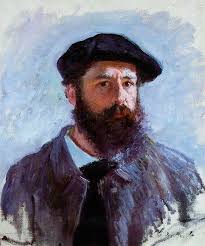
In 1872, at an exhibition in Paris, there hung a picture called "Impression, Sunrise." A critic sneered at "the Impressionists." Monet took no offense. He took the word and made it the name of a movement that would change the whole of twentieth-century painting.
Claude Monet was born in 1840 in Paris and grew up in Normandy, by the sea. At sixteen he was drawing caricatures and selling them in a local shop. One day Eugène Boudin — a landscape painter who worked in the open air — walked in, and dragged the boy out to paint from nature. "If you want to paint the sea, go to the sea."
Monet followed that advice for the rest of his life. He set up his easel in the rain, lashed his canvas down with rope in a storm, rigged a studio-boat on the river. He needed the light of this exact moment — not yesterday's, not tomorrow's.
Hence the series: the same place at different hours and in different seasons. Haystacks — 25 canvases. Rouen Cathedral — 30. The water-lily pond — more than 250. This is not repetition. It is an inquiry into how perception changes when the light changes.
In his last years cataracts left him nearly blind. Colors blurred; he saw the world through a yellow haze. It was precisely then that he painted his largest "Water Lilies" — the vast panels for the Orangerie in Paris. He could tell his colors apart, it is said, only by the labels on the tubes. But he kept working.
He died in 1926 at Giverny, in a house with a garden he had laid out himself — and had spent a lifetime painting.