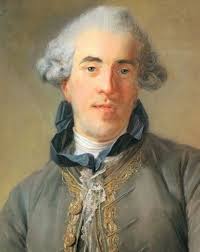
Pierre Choderlos de Laclos was born in 1741 in Amiens and chose a military career: artillery, garrison duty, slow advancement. He spent most of his life in provincial fortresses, far from Paris and its salons. By his own account, he wanted to create a work that would go beyond the ordinary. And that is exactly what happened when "Les Liaisons dangereuses" appeared in 1782.
The novel is built on correspondence. The Marquise de Merteuil and the Vicomte de Valmont write each other letters about their manipulations of third parties — and these letters are at once evidence, weapon and trap. Nowhere in the book is there a scene in which a character says what he thinks. All power lies in control over exactly what is written and to whom it is passed.
Merteuil is the most complex character. In one of her letters she describes how she educated herself: she trained her face to conceal emotion, she read the philosophers in order to understand the rules of a game that women were officially forbidden to play. She is not a villain in the usual sense — she is a person who adapted perfectly to a system in which the only power available to her was power over the reputation of others.
The book came out in April 1782. By the end of that same year it had been condemned, placed on the Catholic Church's Index of Forbidden Books, and confiscated from booksellers. By that same time it had already gone through several editions. This paradox, it seems, Laclos had foreseen: the scandal was part of the calculation.
After the novel's noisy success Laclos returned to his military career. During the Revolution he worked with the Duke of Orléans — the man who voted for the king's execution and was himself later guillotined. Laclos survived the Terror, which was a rarity for a man of that circle. Under Napoleon he rose to the rank of general of artillery.
He died in 1803 during the Italian campaign. He wrote no further works of fiction. "Les Liaisons dangereuses" remained his only novel: perhaps he understood that he had said everything he wanted to say, and that any continuation would be weaker.
Stendhal, Balzac and Flaubert read Laclos. In the twentieth century the novel was filmed three times — in 1959, 1988 and 1989. Each generation finds its own thing in it: now an analysis of power, now an anatomy of communication, now a portrait of the gender traps of the age. Laclos wrote about one specific society of the 1780s — and struck something more enduring.