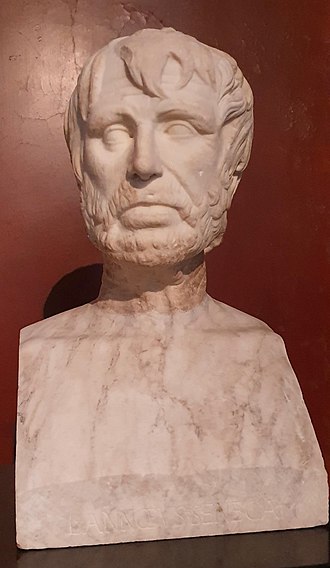
Hesiod (c. eighth century BC) was an ancient Greek poet, one of the first known authors of European literature — a contemporary of Homer, or slightly later.
The Theogony is his poem on the origin of the gods and the world. Chaos, Earth, Eros, Sky: Hesiod builds the first systematic picture of the world's order, the forerunner of philosophical cosmology.
Works and Days tells of the five ages of mankind: the golden, when men lived like gods; the silver; the bronze; the heroic; and the present age of iron, worst of all. Here, for the first time in the European tradition, is the idea of a golden age behind us — of mankind in decline.
Hesiod is no mere mythographer. He was the first to join mythological narrative to moral reflection: labor, justice, and honesty are not abstract virtues but conditions of survival. "Work is no disgrace; the disgrace is idleness."
His influence is immense: Plato drew on him in the Republic, and the notion of the golden age passed through Virgil, Ovid, Rousseau, and the Romantics, and has lived on into our own day.