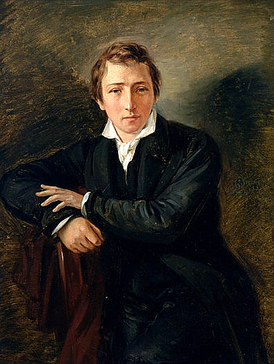
Heinrich Heine was a German poet who wrote in German, thought in French, and felt himself a Jew — which is to say, never entirely at home anywhere. That became his theme.
He was born in Düsseldorf in 1797. A rich uncle, a banker, paid for his education, though he parted with the money grudgingly. Heine studied law and wrote verse. The Book of Songs (1827) was the collection that made him famous: love lyrics shot through with irony — feeling, and the mockery of feeling, at once.
In 1831 he left for Paris, for good. There he wrote for German newspapers, was friends with Marx, and met Liszt and Chopin. Germany: A Winter's Tale is a poem about coming home, full of bitterness and sarcasm.
His last eight years were spent in what he called his "mattress grave": paralyzed and nearly blind, he kept writing. He died in 1856. Schubert, Schumann, and Brahms set his poems to music.