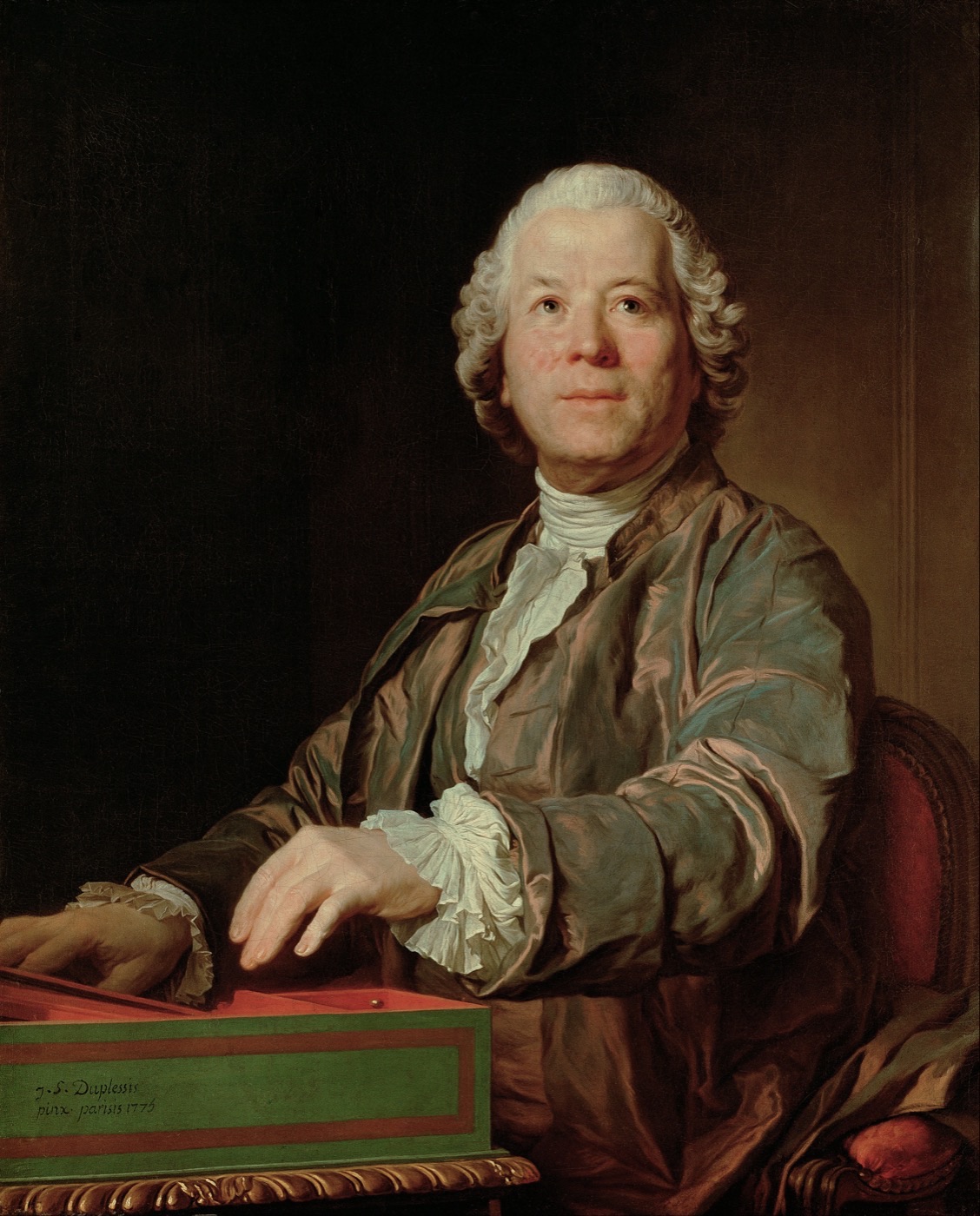
Christoph Willibald Gluck (1714–1787) reformed opera so thoroughly that the genre could never again be what it had been. A forester's son from the Czech-German borderlands, he made a long journey — Prague, Milan, London, Vienna, Paris. He began by writing the Italian opera seria his age expected, with its lavish arias and virtuoso set pieces for the singers, until it dawned on him that opera had become a concert of soloists in which the drama drowned.
The break came in 1762, with the Vienna premiere of Orfeo ed Euridice on a libretto by Ranieri Calzabigi. Gluck did the seemingly impossible: he stripped away the ornament and wrote music of plain grandeur in which nothing mattered more than the truth of feeling. Orfeo's aria "Che farò senza Euridice," the famous flute melody of the Dance of the Blessed Spirits, and the scene in Elysium became the pattern for a new, "noble" operatic style. In the preface to Alceste (1767) he set down his principles: music must serve the poetry and the dramatic action, not the vanity of singers.
In the 1770s Gluck moved to Paris, where in the famous quarrel of the Gluckists and the Piccinnists he defended the idea of musical theatre as high tragedy. His Iphigénie en Aulide and, above all, Iphigénie en Tauride are models of classical clarity and emotional force; Berlioz and Wagner would later admire them.
The young Antonio Salieri studied with him, and out of his work grew the new understanding of opera that Mozart would honour in Idomeneo, Berlioz in Les Troyens, and Wagner in his own reforming manifestos.
Gluck matters not for this or that melody but for a turning: after him, opera is drama once more, not a parade of voices.