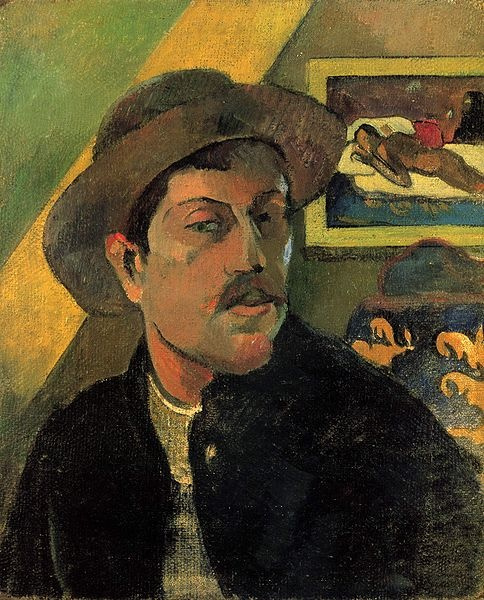
In 1891 he sold the last of what he owned, bought a steamship ticket, and sailed for Tahiti. He was forty-three. Behind him he left a wife, five children, a stockbroker's career, and Europe itself.
Paul Gauguin was born in Paris in 1848. He spent his childhood in Peru — his mother was a Creole — then returned to France, served in the navy, and worked at the stock exchange. He painted on weekends. At thirty-five he threw it all over and became a painter, to the horror of his wife and children.
He was a friend of Van Gogh's — the two lived together for two months in Arles. It was during those two months that Van Gogh cut off his ear. What passed between them, no one knows for certain. Gauguin left that same night.
In Tahiti he was not after the exotic — he was after something Europe had already lost. Untouchedness. Firstness. Life without masks. He learned the local language, married a Tahitian girl, and painted canvases of flat color and heavy figures — nothing like European perspective.
Where Do We Come From? What Are We? Where Are We Going? — the great panel of 1897–1898. He painted it in a single month, in illness, after the death of his daughter. Then he tried to poison himself. He survived. He went on.
He died in the Marquesas in 1903, destitute. The last canvases from his hut were sold off for next to nothing. Later they were found. Today Where Do We Come From? hangs in Boston and is valued in the hundreds of millions.