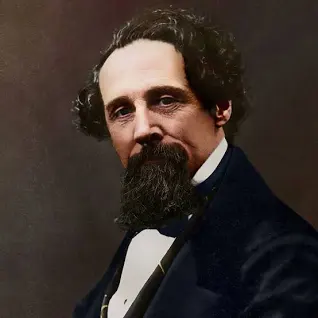
Charles Dickens did not learn poverty from books. At twelve he was sent to work in a blacking factory, pasting labels ten hours a day while his father sat in debtors' prison. He told no one about it for the rest of his life. But out of that experience came Oliver Twist, Little Dorrit, David Copperfield.
He was born in Portsmouth in 1812. He worked his way up to reporter, then to novelist — his books appeared in newspapers in installments, and readers waited each week for the next number as for a serial. The Pickwick Papers made him famous at twenty-four.
Dickens wrote about London until the city became a living creature, with its burrows, its fogs, its smells, its voices. Great Expectations, Bleak House, Hard Times, A Tale of Two Cities — each novel an attack on something specific: the workhouses, the bureaucracy, the heartlessness of the rich, the injustice of the law.
He died in 1870 at his writing desk, in the middle of The Mystery of Edwin Drood. He had asked to be buried modestly, without processions. London did not obey.