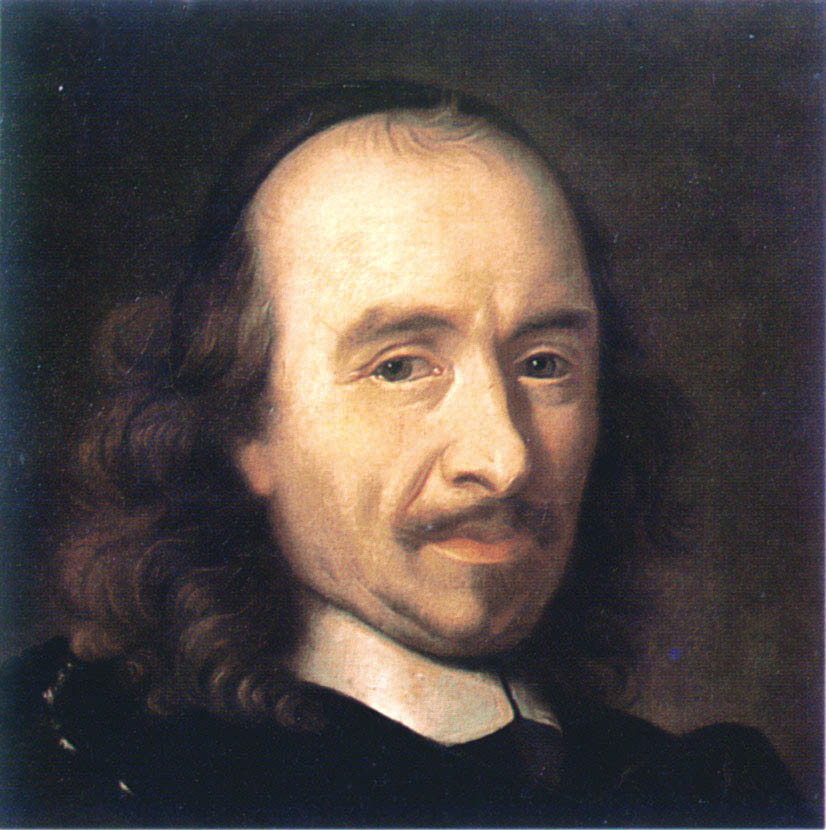
Pierre Corneille was born in 1606 in Rouen, into the family of a Norman lawyer, and trained as a lawyer himself. There was hardly any legal practice — but there was a passion for the theatre. In 1629 his first comedy, "Mélite", was staged: an unexpected success. By 1637 he had written several more plays, but the real test came with "Le Cid".
The story of "Le Cid" is Spanish: Don Rodrigo must challenge to a duel the father of the girl he loves, because that man has insulted his own father. He kills him — and by doing so loses forever any right to his beloved. But she too, Chimène, cannot renounce her honour: she is bound to seek vengeance for her father — from the very man she loves. Two duties, two honours, two truths — and not a single villain. This is the Corneillean conflict in its purest form.
The French Academy examined "Le Cid" in an official document: the three unities are broken, the morality is dubious, Chimène should not marry the man who killed her father. Cardinal Richelieu, the Academy's patron, was displeased by the play's success — perhaps that is why the criticism sounded so harsh. The public reacted otherwise: "Le Cid" became the first French literary hit in the modern sense of the word.
Corneille answered the criticism with silence — for three years. And then he wrote "Horace" (1640), "Cinna" (1641) and "Polyeucte" (1642): three tragedies in a row, each unfolding the same theme. In "Horace" a son kills his sister in the name of Rome — and Rome absolves him. In "Cinna" Augustus forgives a conspirator — and this proves mightier than execution. In "Polyeucte" a Christian goes to martyrdom — and converts the pagans. Duty, will, decision — three variations on one question: what makes a human being human.
In the 1650s Corneille suffered several failures and for almost eight years wrote nothing for the theatre. When he returned, it turned out that the stage was already ruled by Racine: younger, subtler, more popular. Racine wrote of passion stronger than the will; Corneille, of the will stronger than passion. The public of the 1670s preferred Racine. This was not someone else's success — it was the rupture of two epochs.
Corneille died in 1684 in Paris, having outlived most of his chief rivals. His contemporary and critic Boileau acknowledged him as the first creator of French tragedy — but only in the past tense. By that point Racine had already abandoned the theatre. A strange inversion: both great tragedians depart at roughly the same time — one into death, the other into courtly silence.
The "Corneillean hero" became a fixed type: a man who chooses duty against desire — and does not regret it. This is neither stoicism nor resignation. It is the conviction that it is precisely in such a choice that a person becomes himself. In the twentieth century this idea returned unexpectedly — in existentialism. Sartre's "condemned to be free" is, in structure, the same as the Corneillean conflict. Only without God and without monarchy.