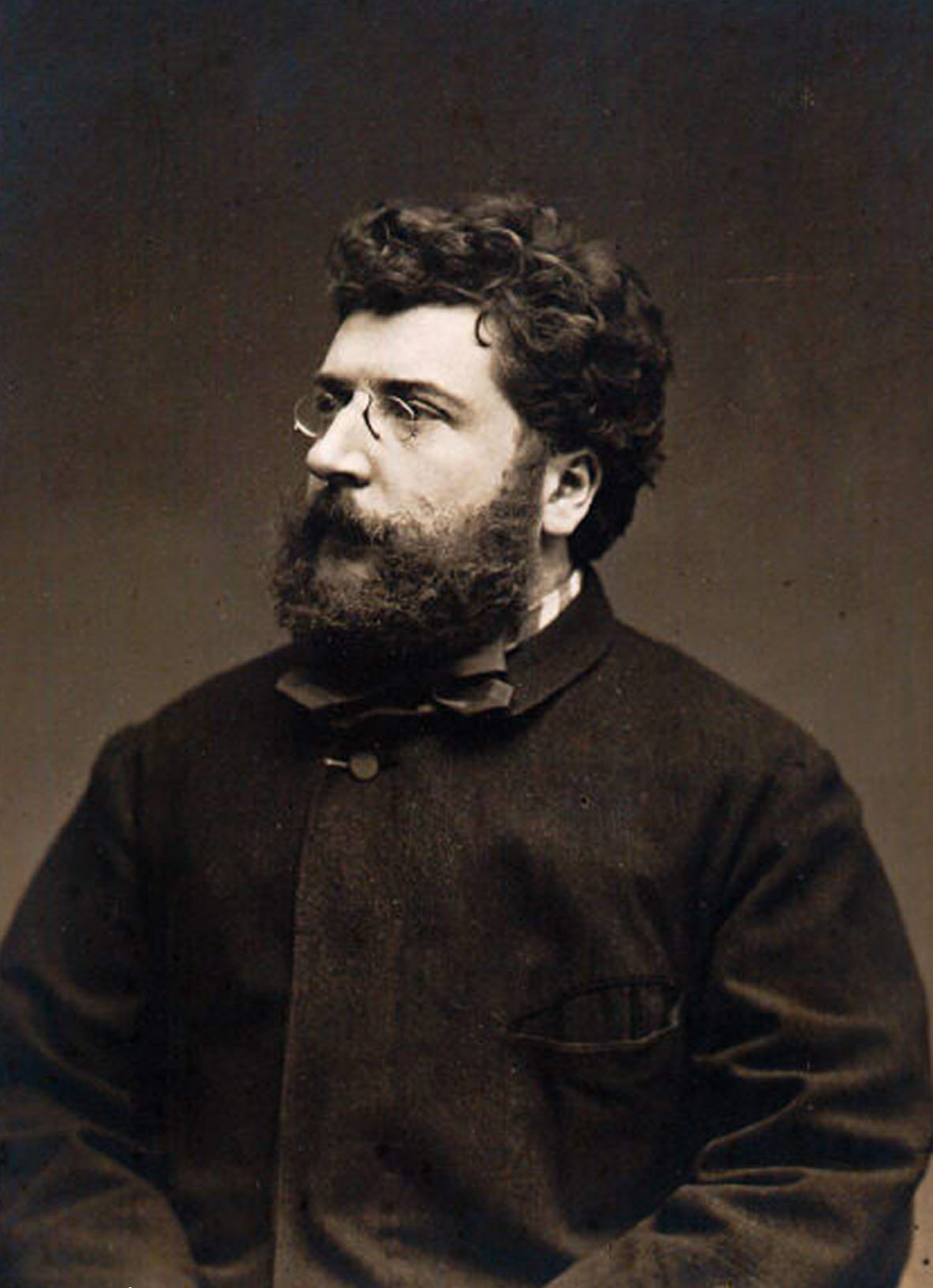
Georges Bizet (1838–1875) was a French composer, the author of one of the world's best-loved operas, and a man who did not live to see his own fame. Born in Paris into a musical family, he entered the Paris Conservatoire at nine and won the Prix de Rome at nineteen. In Italy he wrote a charming Symphony in C major of almost Mozartean clarity — a work that would be forgotten for nearly a century and rediscovered only in the 1930s.
The Parisian stage received him coolly. "The Pearl Fishers", with its piercing duet for Nadir and Zurga, "The Fair Maid of Perth" and "Djamileh" passed almost unnoticed. Meanwhile Bizet was writing a brilliant piano suite for children, "Jeux d'enfants", and, above all, the music for Alphonse Daudet's drama "L'Arlesienne". From that score the conductor Ernest Guiraud assembled two suites — the "Farandole", the "Minuet", the "Prelude" — without which no orchestra today can do.
The great work of his life was the opera "Carmen" (1875), after Merimee's novella. Its premiere at the Opera-Comique met with shock and hostility: a Gypsy heroine, smugglers, a toreador, a murder before the audience's eyes — too coarse, too true for the bourgeois theatre. Three months after the premiere Bizet died of complications from illness at thirty-six, never knowing that "Carmen" would become the most performed opera in the world, loved by Nietzsche, Tchaikovsky, Brahms, Wagner and Debussy.
From "Carmen" a straight path leads to the verismo of Mascagni and Leoncavallo, while the orchestral discoveries of "L'Arlesienne" would later echo in Debussy and Ravel.
To listen to Bizet is to hear French clarity meet Spanish passion and give birth to living, modern drama.