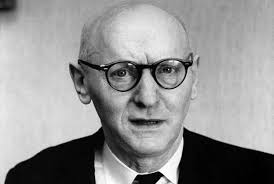
Isaac Bashevis Singer wrote in Yiddish, in New York, for a readership that kept shrinking. After the Holocaust, few speakers of Yiddish were left in the world. Yet his stories of Polish shtetls, of demons and rabbis, of love and betrayal, were read everywhere in translation. In 1978 he received the Nobel Prize.
He was born in 1904 in Leoncin, Poland. His father was a rabbi, and the air of his childhood was the Hasidic world with its tales of miracles and dybbuks. In 1935 he emigrated to the United States — almost on the last train out. His brother, also a writer, had gone before him.
The Family Moskat, The Slave, Shosha, Enemies, A Love Story — his novels are a world that no longer exists: Polish Jewry before the Second World War and during it. The stories themselves are not historical chronicles but living things. A woman who cannot choose. A man whose conscience gets in his way. A demon who loves human beings.
He delivered his Nobel lecture in Yiddish — deliberately. He died in 1991. "I want to write about the dead," he said, "so that they may live."