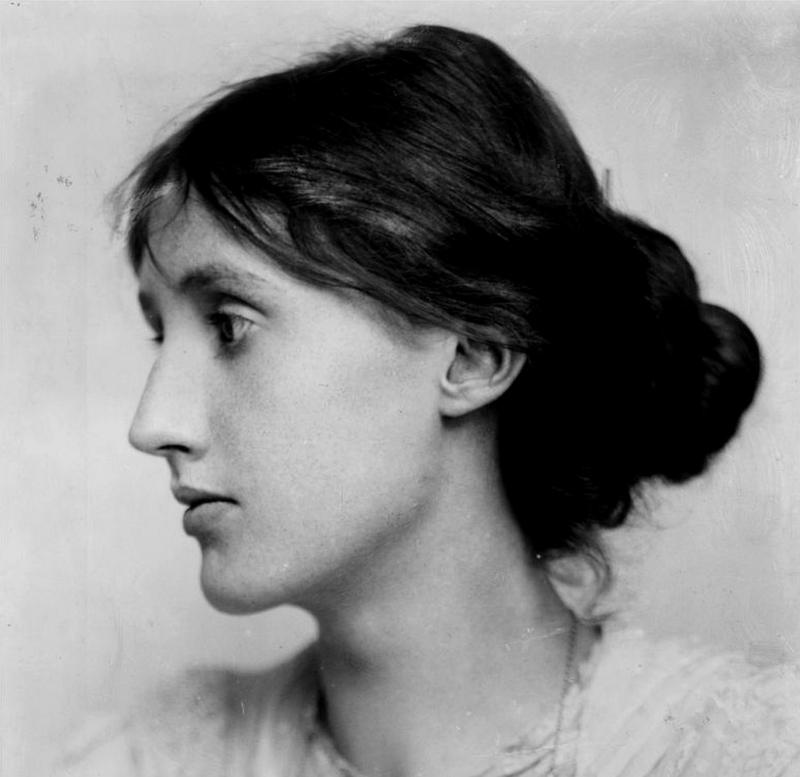
On 28 March 1941 Virginia Woolf filled the pockets of her coat with stones, walked into the River Ouse, and did not come out. In her note to her husband she wrote: "I can't fight any longer." She was fifty-nine.
She was born in London in 1882, the daughter of the man of letters Leslie Stephen. Her education was conducted at home, in her father's library. After his death came the move to Bloomsbury and a circle of artists and intellectuals: Keynes, Forster, Lytton Strachey.
Mrs Dalloway (1925), To the Lighthouse (1927), The Waves (1931) — stream of consciousness, interior monologue, time as subjective experience. She did not tell a story; she showed how a story exists inside a person.
A Room of One's Own (1929): for a woman to write, she needs money and a space of her own. The essay became a manifesto.