The Life
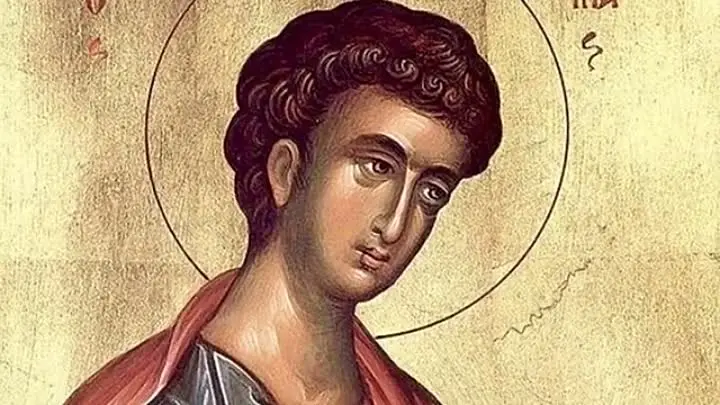
The Holy Apostle Thomas, called the Twin, was born in the Galilean town of Paneas. When our Lord Jesus Christ, during His sojourn on earth among men, was passing through the cities and villages, teaching the people and healing every kind of sickness, Thomas heard His preaching and beheld His miracles, and clung to Him with all his soul. Nourished by the sweet words of Jesus Christ and by the contemplation of His most holy Face, Thomas followed after Him and was deemed worthy by the Lord to be numbered among the twelve Apostles, with whom he accompanied Christ up to His saving Passion. After the Lord's resurrection, holy Thomas, by his very doubt concerning the words of the other Apostles, strengthened still further the faith of the Church of Christ; for while the rest of Christ's disciples said, "We have seen the Lord," he would not believe them until he himself should see Christ and touch His wounds. Eight days after the resurrection, when all the disciples were gathered together and Thomas was among them, the Lord appeared to them and said to Thomas: "Reach hither thy finger, and behold my hands; and reach hither thy hand, and thrust it into my side; and be not faithless, but believing."
Beholding Christ and touching His life-giving side, Thomas exclaimed: "My Lord and my God" (John 20:24-29).
This episode with Thomas assures all, in the most vivid way, of the truth of the Lord's resurrection; for Christ appeared to the disciples not as a phantom, nor in some other body, but in that very same body in which He suffered for our salvation.
After the ascension of Jesus Christ into heaven and the descent of the Holy Spirit, the Apostles cast lots among themselves as to where each of them should go to preach the Word of God. To Thomas fell the lot of going to India, to enlighten the lands darkened by paganism and to teach the true faith to the various peoples dwelling there — the Parthians and Medes, the Persians and Hyrcanians, the Bactrians and Brahmins, and all the most distant inhabitants of India.
Thomas grieved greatly that he was being sent to such savage peoples; but the Lord appeared to him in a vision, strengthening him and commanding him to be courageous and unafraid, and promising to abide with him Himself. He soon showed him also the means of entering those lands.
Gundaphorus, king of India, wishing to have a palace built for himself with the utmost skill, sent his merchant Abban to Palestine, that he might seek there such a skilled builder, experienced in construction, who could raise halls like those of the Roman emperors. It was with this very Abban that the Lord commanded Thomas to go to the lands of India. While Abban was seeking skilled architects in Paneas, Thomas met with him and presented himself as a man experienced in the art of building. Abban hired him, boarded a ship with him, and they set out on their journey with a favorable wind.
When they put in at a certain city, they heard there the sound of trumpets and other musical instruments. The king of that city was giving his daughter in marriage, and he had sent heralds to proclaim throughout the whole city that rich and poor, slaves and strangers alike should gather for the wedding, and that whoever would not come should be subject to the king's judgment. Hearing this, Abban and Thomas, fearing as strangers to anger the king if they did not obey him, went to the marriage feast in the royal court. When all had taken their places and begun to make merry, the Apostle sat down in the very lowest place and ate nothing, nor took part in the merriment, but sat sunk in thought. All looked upon him as a wanderer and a foreigner. And those who reclined near him said to him:
"Why have you come here, when you neither eat nor drink?"
The Apostle answered:
"I have come here not to eat and drink, but to fulfill the will of the king; for the heralds loudly proclaimed that whoever did not appear at the wedding would be subject to the king's judgment."
At that time there was among the feasters a certain Hebrew woman who played beautifully upon the pipe, singing some greeting to each of the reclining guests. Seeing Thomas, who did not make merry but only often raised his eyes to heaven, she understood that he was a Jew, and, playing before him, she sang to him in the Hebrew tongue this refrain: "One is God — the God of the Hebrews, who made heaven and earth."
The Apostle, listening to this refrain with pleasure, asked her several times to repeat those words.
The cupbearer, seeing that the Apostle did not make merry, struck him upon the face, saying:
"You are bidden to a wedding — be not sorrowful, but rejoice and join the drinkers."
Then the Apostle said to the one who had struck him:
"May the Lord requite you for this even in this present life, that I may see the hand which struck me dragged forth by a dog for many to behold!"
Some time later the cupbearer who had struck the Apostle went out to the well, intending to bring the guests water to mix with the wine. There a lion suddenly fell upon him, threw him down and slew him, and, having sucked out his blood, withdrew. Then dogs came running and tore his body to pieces, and one black dog, seizing his right hand, dragged it into the feast and cast it down before all. All who were present, seeing this, were seized with horror and asked whose hand it was. But the woman who had been playing the pipe cried out:
"Something wondrous and mysterious is now taking place among us: there is among the guests reclining here either God or a messenger of God. For I saw how the cupbearer struck a certain man, and I heard that man say in Hebrew, 'May I see your right hand dragged by a dog for many to behold' — which, as you all see, has come to pass."
After these words fear fell upon all.
When the feast was over, the king, having heard of what had happened, summoned the holy Apostle Thomas and said:
"Enter the palace and bless my daughter who has been given in marriage."
The Apostle, entering the bridal chamber, began to instruct the newlyweds in chastity and in the keeping of pure virginity, and, having prayed for them, blessed them and departed. In their sleep the newlyweds saw Jesus, who appeared to them in the likeness of the Apostle Thomas and embraced them with love. The husband, thinking that Thomas stood before him, said to him:
"You left us before all the others — how is it that you are here again?"
The Lord answered:
"I am not Thomas, but his brother; and all who renounce the world and follow after Me as he has done shall not only be My brethren in the life to come, but shall also inherit My kingdom. Therefore do not forget, My children, what My brother counseled you; and if, according to his counsel, you keep your virginity undefiled, you shall be deemed worthy of incorruptible crowns in My heavenly mansion."
Having said this, the Lord became invisible; and they, waking from sleep, told one another what they had seen in the dream, and, rising, prayed fervently to God all through the night; and the words that had been spoken to them they kept in their hearts like precious pearls.
In the morning the king entered the chamber where the newlyweds were, and found them sitting apart from one another. In bewilderment he asked them the reason for such withdrawal from each other. And they answered him:
"We pray to God that He may give us strength to preserve in our marriage, until our very death, the perfect chastity in which we now abide, that for this we may be crowned in the heavenly mansion with incorruptible crowns, as the Lord who appeared to us has promised."
Then the king understood that the stranger who had been at the palace the day before had persuaded them to preserve their virginity, and he grew exceedingly angry and at once sent his servants to seize the Apostle; but they did not find him, for he had already set sail for India together with Abban.
When they arrived, they came before Gundaphorus, king of India, and Abban said:
"Behold, my lord, I have brought you from Palestine a skilled builder, that he may construct such halls as please your majesty."
The king rejoiced, showed Thomas the place where he wished the halls to be built, and, having fixed their dimensions, gave him a great quantity of gold for the construction, while he himself set off for another country.
Thomas, having received the gold, began to distribute it to the needy — to the poor and the wretched — while he himself, laboring in the preaching of the Gospel, converted many to faith in Christ and baptized them.
At that time the young man who, at Thomas's counsel, had promised to preserve his virginity together with his wife, hearing that the Apostle was preaching Christ in India, came to the Apostle together with her. Instructed by the holy Apostle in the faith of Christ, they received from him holy baptism. The maiden received in baptism the name Pelagia and later shed her blood for Christ, while the young man was named Dionysius and later was deemed worthy of the rank of bishop. Returning to their homeland with the Apostle's blessing, they spread the glory of God's Name, converting unbelievers to Christ and building churches in the cities.
After two years had passed, the king sent messengers to the Apostle to learn whether the building of the halls would soon be finished. The Apostle answered the messengers that only the roof remained to be laid. The king rejoiced, for he supposed that Thomas was indeed building him a palace on earth, and sent him still more gold, commanding him to fashion for the halls a magnificent roof with all speed.
Thomas, having received more gold, raised his eyes and hands to heaven, saying:
"I thank Thee, O Lord who lovest mankind, that by various means Thou dost accomplish the salvation of men!"
And again he distributed the gold sent by the king to those who asked his help, while he himself continued diligently to preach the Word of God.
After some time had passed, the king learned that Thomas had not even begun to carry out his command, that all the gold had been given away to the poor, and that the builder gave no thought to the building, but, going about the cities and villages, was preaching some new God and working wondrous miracles. The king fell into a violent rage and sent his servants to seize the Apostle. When holy Thomas was brought before him, the king asked:
"Have you built the halls?"
Thomas answered:
"I have built them, and they are magnificent and beautiful."
Then the king said:
"Let us go, then, and look upon your palace."
The Apostle answered:
"In this life you cannot behold this palace, but when you depart from this life, then you shall see it, and, dwelling in it with joy, you shall live there forever."
The king, thinking that Thomas was mocking him, was deeply offended and commanded that he be cast into prison together with the merchant Abban who had brought him, where they were to languish awaiting a torturous death: the king intended to flay them alive and burn them upon a pyre.
While they sat in prison, Abban began to reproach the Apostle:
"You," he said, "have deceived both me and the king, calling yourself a most skilled builder. And now you have squandered the king's gold to no purpose and have ruined my life. Because of you I suffer and must die a cruel death: the king is merciless and will put us both to death."
But the Apostle, comforting him, said:
"Fear not; the time for us to die has not yet come. We shall live and be free, and the king shall honor us for those halls that I have built for him in the kingdom of heaven."
That very same night the king's brother fell ill and sent word to the king:
"Because of your grief I too have fallen into sorrow, and from this sorrow I have fallen into a sickness, of which I am now dying."
Immediately thereafter the king's brother did indeed die. The king, forgetting his former vexation, fell into a new grief and wept inconsolably over his brother's death. But an angel of God, taking the soul of the deceased, bore it up into the heavenly dwellings and, passing through the villages there, showed it many magnificent and shining halls, among which one was so beautiful and radiant that its beauty is beyond describing. And the angel asked the soul:
"In which of all these halls would you most wish to dwell?"
And the soul, gazing upon that most beautiful hall, said:
"If I were permitted to abide even in a corner of that hall, I would need nothing more."
The angel said to it:
"You cannot dwell in this hall, for it belongs to your brother, for whose gold the stranger you know, Thomas, built it."
And the soul said:
"I beseech you, my lord, let me go to my brother, and I will buy this hall from him, for he does not yet know its beauty — and then, having bought it, I will return here again."
Then the angel returned the soul to the body, and the dead man at once came to life and, as if waking from sleep, asked those around him about his brother, and begged that the king come to him quickly. The king, hearing that his brother had come to life, rejoiced greatly and hastened to him, and, seeing him alive, became still more joyful. And the one who had risen began to say to him:
"I am certain, O king, that you love me as your brother; I know that you wept inconsolably over me, and that if it were possible to deliver me from death, you would give even up to half your kingdom for it."
The king answered:
"Yes, this is the perfect truth."
"If you love me so," said the king's brother, "then I ask of you one gift — do not refuse me it."
The king answered:
"All that I possess in my kingdom I give to you, my beloved brother" — and he confirmed his promise with an oath. Then the risen brother said:
"Give me your hall which you have in heaven, and take for it all my wealth."
The king, hearing such words, was thrown into confusion and fell silent, as though he had lost the power of speech. Then he said:
"How could I have a hall in heaven?"
"Truly," answered the king's brother, "in heaven there is such a hall as you know nothing of, and such as you have never seen in all the world beneath the sky. Thomas, whom you hold in prison, built it for you; I saw it and marveled at its unspeakable beauty and asked to be placed even in one corner of it, but this was not permitted me; for the angel who led me said: you cannot dwell in it, because it is the hall of your brother, which the Thomas you know built. I begged the angel to let me go to you, that I might buy that hall from you. And so, if you love me, give it to me and take in its place all my possessions."
Then the king rejoiced both at his brother's return to life and at the hall built for him in heaven. And he said to his risen brother:
"Beloved brother! I swore not to refuse you anything on earth that is subject to me; but that hall which is in heaven I did not promise you. Yet if you wish, we have a builder who can construct such a hall for you as well."
Having said this, the king at once sent servants to the prison to bring out from there holy Thomas together with the merchant Abban who had brought him. When they came before the king, he hastened to meet the Apostle and fell at his feet, begging his forgiveness for the sin he had committed against him in ignorance. And the Apostle, giving thanks to God, began to teach both brothers faith in our Lord Jesus Christ — and they, moved in soul, received his words with love. Soon after, he baptized them and taught them to live as Christians, and by their abundant almsgiving the brothers built themselves eternal dwellings in heaven. Having remained with them for some time and confirmed them in the holy faith, the Apostle went on to other neighboring cities and villages, laboring in the work of saving human souls.
At the time when Thomas was enlightening the lands of India with the preaching of the Gospel, there came the hour of the honorable falling-asleep of the Mother of God, and all the Apostles from the various lands were caught up on the clouds of heaven and carried to Gethsemane, to the bed of the Most Blessed Virgin. Then holy Apostle Thomas too was caught up from India, but he did not arrive in time for the very day of the burial of the God-glorified body of the Most Pure Theotokos. This was arranged by the will of God in order to assure believers that the Mother of God was taken up into heaven with her body. For just as concerning Christ's resurrection we were more firmly established in faith through the unbelief of Thomas, so concerning the taking up into heaven with her body of the Most Pure Virgin Mary the Theotokos we learned through the delay of Thomas. The Apostle arrived only on the third day after the burial and grieved that he had not been able to be in Gethsemane on the very day of the burial, to bear, together with the other Apostles, the body of the Mother of his Lord to the place of burial. Then, by common agreement of the holy Apostles, the tomb of the Most Holy Theotokos was opened for holy Thomas, that he, beholding the most honorable body, might venerate it and be comforted in his grief. But when the tomb was opened, they did not find the body, but only the burial shroud lying there. And from this all were firmly assured that the Mother of God, like her Son, had risen on the third day and had been taken up into heaven with her body.
After this Thomas appeared again in the lands of India and preached Christ there, converting many to the faith by signs and miracles. Arriving in Meliapor, he enlightened many there by the preaching of the Gospel and confirmed them in the holy faith by the following miracle. In a certain place there lay a tree of extraordinary size, which not only men but even elephants could not move from the spot; but Thomas bound his girdle to this tree and by that girdle dragged the tree ten stadia and gave it for the building of the Lord's temple. Seeing this, the believers were strengthened still more in the faith, and many of the unbelievers came to believe. The Apostle also worked there another miracle, greater still than the first. A certain pagan priest killed his own son and accused holy Thomas of it, saying:
"Thomas killed my son."
A tumult arose among the people, and the gathered crowd seized holy Thomas as a murderer and demanded that the court condemn him to torment. When there was no one who could bear witness that Thomas was innocent of that murder, the Apostle of Christ began to entreat the judge and the people:
"Release me, and I, in the name of my God, will ask the slain one, that he himself may say who killed him."
They all went with him to the body of the slain son of the priest. Raising his eyes to heaven, Thomas prayed to God and then said to the dead man:
"In the name of my Lord Jesus Christ I command you, young man — tell us who killed you?"
And at once the dead man said:
"My father killed me."
Then all cried out:
"Great is the God whom Thomas preaches."
The Apostle was released, and the priest thus fell into the very pit that he had dug for the Apostle. After this miracle a great multitude of people turned to God and received baptism from the Apostle.
Then the Apostle went still farther, into the land of Calamina, where King Misdaeus reigned. Preaching Christ here, the saint converted to the faith a certain woman named Sindicia, niece of Mygdonia, the wife of Charisius, a favorite of the king. Sindicia urged Mygdonia to come to know the truth and to believe in the One God, the Creator of all the universe, whom Thomas preaches. Then Mygdonia said to Sindicia:
"I should like myself to see the man who preaches the true God, and to hear his teaching from him."
Sindicia answered:
"If you wish to see the Apostle of God, dress in poor clothing, as though you were a simple and poor woman, so that you may not be recognized, and then come with me."
Mygdonia did so and went with Sindicia. They found the Apostle preaching Christ in the midst of a great crowd of simple and poor people. Mingling with the crowd, they began to listen to the teaching of Thomas, who spoke much of Christ the Lord and taught faith in Him, and who spoke also of death, of judgment and Gehenna, and of the kingdom of heaven. Hearing all this, Mygdonia was moved in her heart and believed in Christ; and returning home, she pondered continually upon the apostolic words and, conversing with her niece Sindicia about Christ, was confirmed in her love for Him. From that time she began to abhor unbelievers as enemies of God and to avoid all fellowship with them at conversation and at feasts, and at the same time to withdraw generally from worldly pleasures. She also resolved to cease conjugal cohabitation with her husband. This grieved him deeply, and when he could not compel Mygdonia to change her decision, he began to beg King Misdaeus to send his own wife, Queen Tertiana, to persuade Mygdonia not to abhor the marriage bond (Queen Tertiana and Mygdonia, the wife of Charisius, were sisters). The queen went to Mygdonia and asked her for what reason she did not obey her husband.
Mygdonia answered:
"Because he is a pagan and an enemy of God, and I am a handmaid of the One true God, Jesus Christ, and I do not wish to be defiled by an unbelieving and impure man."
Tertiana wished to know who this Jesus Christ was, whom Mygdonia called the true God. Then Mygdonia set forth before her the preaching of the Apostle Thomas and taught her the knowledge of the true faith. Tertiana, desiring to know more definitely about Christ and to learn the faith better, wished to see the Apostle himself and to hear his preaching. Having taken counsel with Mygdonia, she secretly sent for the Apostle, and, having summoned him, both entreated him to guide them to the path of truth. And he, preaching Christ to them, enlightened them with the light of faith, washed them in the font of holy baptism, and taught them the keeping of God's commandments and every virtue. Tertiana and Mygdonia, having sealed in their hearts all that had been said to them, both agreed to serve the Lord in purity and not to consort with their husbands as with unbelievers. And the Apostle, by the power of God, continued to work many miracles and to heal every kind of infirmity, and many, not only of the common people but even of the king's courtiers, seeing the signs wrought by the Apostle and hearing his teaching, turned to Christ. One of the king's own sons, named Azan, believed and was baptized by the Apostle; for the Lord Himself was working through the Apostles, multiplying His Church and spreading the glory of His name.
Queen Tertiana, returning from Mygdonia, abode in prayer and fasting and continued to refuse carnal cohabitation with her husband. The king, marveling at such a change in his wife, said to his friend Charisius:
"In wishing to restore your wife to you, I have lost my own as well, and mine has come to treat me even worse than yours does you."
After this the king and Charisius conducted a most rigorous investigation into the cause of the change they had noticed in their wives, and learned that a certain foreigner and stranger, named Thomas, having taught them the faith of Christ, had persuaded them to cease conjugal cohabitation with their husbands. They learned also that the king's son Azan and many of the servants of the royal house, as well as officials and a countless multitude of the common people, had, through the preaching of Thomas, come to believe in Christ. All this brought them to anger, and they, seizing Thomas, cast him into prison. After this the Apostle was brought before the king for judgment. The king asked him:
"Who are you — a slave or a free man?"
Thomas said:
"I am the slave of One over whom you have no power."
The king said:
"I see that you are a cunning slave, who has fled from his master and come to this land to corrupt the people and trouble our wives. Tell me, then, who is your master?"
"My master," answered the Apostle, "is the Lord of heaven and earth, God and Creator of every creature. He sent me to preach His holy Name and to turn people from error." The king said:
"Cease your crafty speeches, deceiver, and obey my command: as you have by your cunning turned our wives away from us, so that they will not consort with us, so turn them again to us. For if you do not bring it about that our wives dwell with us again in their former love and fellowship, we shall put you to a cruel death."
The Apostle answered:
"It is not fitting for the handmaids of Christ to have conjugal fellowship with lawless husbands, nor for believers to be defiled by the impious and unbelieving."
Hearing this, the king commanded that red-hot iron plates be brought and the Apostle be set upon them with bare feet. When this was done, water suddenly appeared beneath the plates and cooled them. Then holy Thomas was thrown into a fiercely heated furnace, but on the next day he came out of it alive and unharmed.
After this Charisius came to the king with the following counsel:
"Compel him to bow down and offer sacrifice to the sun-god, that he may thereby anger his own God, who keeps him unharmed amid torments."
When the Apostle was led to the idol of the sun, the idol at once melted and dissolved like wax. The believers rejoiced at the sight of such power of the Heavenly God, and a multitude of unbelievers turned to the Lord. But the idol-priests murmured against Thomas for the destruction of their idol, and the king himself, exceedingly offended, considered by what means he might destroy him; yet he feared the people and his servants and the many nobles who had come to believe in Christ.
Taking Thomas, the king went out of the city with his soldiers, and all supposed that he wished to see some miracle from the Apostle. Having gone about a mile, the king handed Thomas over to five soldiers, ordering them to go up with him onto a mountain and there pierce him with spears, while he himself went to the city of Axium. But Azan, the king's son, and a certain man named Siphor hastened after the Apostle and, overtaking him, wept over him. Then Thomas, having asked leave of the soldiers to make a prayer, prayed to the Lord and ordained Siphor a priest and Azan a deacon, and charged them to care for the increase of the faithful and the spread of the Church of Christ. After this the soldiers pierced him with five spears, from which he died. Siphor and Azan long lamented over him and honorably buried his holy body. When the burial was accomplished, they sat by the Apostle's grave and grieved. And behold, the saint appeared to them, commanding them to go into the city and confirm the brethren in the faith. Following this command of their teacher, the holy Apostle Thomas, and aided by his prayers, they successfully governed the Church of Christ. King Misdaeus and Charisius long tormented their wives, but were unable to bend them to the fulfillment of their desire. Understanding that their wives would never obey them, even unto death, they were obliged to leave them to live in freedom, according to their own will. Freed from the burden of the marriage yoke, the women passed their lives in strict abstinence and prayer, serving the Lord day and night, and by their virtuous life brought great benefit to the Church.
Several years later, one of the sons of King Misdaeus fell into demonic possession, and no one could heal him, for a most cruel demon dwelt within him. The king was exceedingly grieved by his son's illness and conceived the plan of opening the tomb of the holy Apostle, in order to take one of the bones of his body and bind it about his son's neck, that he might be delivered from the torment of the demon; for he had heard that holy Thomas during his lifetime had cast out a multitude of demons from people. But when the king was about to do this, holy Thomas appeared to him in a dream and said:
"You did not believe the living man; do you think to find help from the dead? Yet do not remain in your unbelief — and my Lord Jesus Christ will be merciful to you."
This dream only strengthened the king's desire to open the Apostle's tomb. Going to the place of the saint's burial, Misdaeus opened the grave, but did not find his relics there, for a certain Christian had secretly taken the holy relics and carried them off to Mesopotamia and there laid them in a fitting place. Taking earth from that place, the king bound it about his son's neck, saying:
"O Lord Jesus Christ! By the prayers of Thy Apostle Thomas, heal my son, and I will believe in Thee."
And the demon at once went out of the king's son, and the boy recovered. Then King Misdaeus believed in Christ and, together with all his nobles, received baptism from the priest Siphor. Great joy took hold of the hearts of the believers, for the idols were shattered and their temples destroyed, and in their place churches of Christ were erected. The Word of God spread, and the holy faith was strengthened. The king, after receiving baptism, repented of his former sins and asked all for their help and their prayers. And the presbyter Siphor said to all the believers:
"Pray for King Misdaeus, that he may obtain mercy from our Lord Jesus Christ and forgiveness of his sins."
And the whole church prayed for the king. In that same place where the holy body of the Apostle had been buried, many miracles were wrought by his prayers, to the glory of Christ our God. May honor and worship be to Him, together with the Father and the Holy Spirit, from us unto the ages! Amen.