The poet begins by wondering in what style he ought to compose his tale, and remembers Boyan, the bard of old, who sang prophetic songs of the princes in the ancient manner. That Boyan, filled with wondrous powers, would circle the field as a grey wolf when he took up a prophetic strain, soar under the clouds like an eagle, let his thought range over the tree. The author imagines the beautiful poetic flourishes with which that "nightingale of old" would have opened a song about Igor, but chooses himself to keep closer to the actual events of his own time.
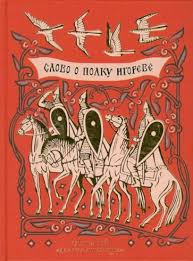
At the heart of the poem lies the ill-starred campaign of the Russian princes against the Polovtsians in 1185. Prince Igor led his regiments against the "pagans," hoping to crush them, win glory, and take rich spoils. The campaign opened under a dark omen — an eclipse of the sun — but the prince held that it was better to fall in battle than to sit at home awaiting a Polovtsian raid. He dreamed of carrying victory to the Great Don and giving battle on the enemy's own ground, at the edge of the Polovtsian steppe.
Igor set out with his own brother, the mighty Vsevolod Svyatoslavich, nicknamed Bui-Tur — the raging bull — for his daring. Vsevolod approved his brother's plan to reach the Don and beat the Polovtsians in their own steppe; his famous druzhina, trained for war from childhood, was already waiting near Kursk for the campaign to begin. All along the road into the Polovtsian steppe, omens of disaster — the eclipse among them — accompanied Igor. All the hostile lands to the southeast of Rus learned of the Russian advance, and the frightened Polovtsians, hearing of the approach of the Rus, came running toward the Don, their old wagons creaking through steppe and gully, crying out like startled swans.
After a night in the steppe, Igor's host drew up in battle order, broke the Polovtsian regiments, and took rich plunder — gold, precious stones, beautiful "Polovtsian maidens." So great was the booty that the enemy's cloaks, coverlets, and sheepskin coats could have paved a causeway across a marsh. Prince Igor kept for himself only the Polovtsian battle standards.
The Russian host camped in the open field a second night, and the author reflects on how far Igor had flown. Meanwhile the hordes of the Polovtsian khans Gzak and Konchak — Gzak headed the union of the Don Polovtsians — were hurrying to meet the Rus. The next day the hordes fell upon the four Russian princes of the campaign — Igor, Vsevolod Svyatoslavich, Oleg, and Svyatoslav — whom the author likens to four suns that the Polovtsian clouds mean to put out. Blue lightnings quiver, flashes ring the sky: here the Russian spears will be shattered, here the sharp sabres blunted against enemy helmets. O Russian land — already beyond the hill!
The Polovtsians surrounded the Rus at the river Kayala and loosed "a cloud of arrows on the Russian regiments"; the description of the battle merges with the image of a gathering storm. It began with an exchange of bowfire; then the earth rang under the horses' hooves, and the dust of the vast horde veiled the field in a cloud. Encircled on every side, the Russian knights locked their line "shield to shield" and braced to repel the assault.
The author dwells on the feats of Vsevolod Svyatoslavich, hewing off Polovtsian heads with his sword and showering the enemy with a rain of arrows. In the heat of the fight he forgot glory and riches, feudal honor, princely duty, the love of his beautiful wife, and felt no pain from his wounds. Long the Russian regiments fought the Polovtsians; the ground under the horses' hooves was strewn with the bones of the dead, blackened far around with blood. The battle ended in the defeat of the Russian host. They fought a day, and a second; by noon of the third day the banners fell, and on the bloody river Kayala brother was parted from brother — Igor and Vsevolod were taken captive by different khans. Nature itself, the author writes, mourned Prince Igor's defeat.
In a lyrical digression the author recalls the Russian past and Prince Oleg Svyatoslavich, from whom Igor's line began — grandfather of Igor and Vsevolod, called Gorislavich, "son of woe," as the instigator of the internecine wars in which he defeated many princes. Under Oleg, who behaved in his own land like an enemy and an occupier, human life lost its worth, the people sank into poverty, and over the unplowed fields ravens and jackdaws circled above the slain. Yet even in those days there had never been a battle like the one on the Kayala.
With Igor's defeat the quiet times on Rus came to an end. The princes ceased to gather their druzhinas and defend the land together against the Polovtsians, each minding only his own interest; the Polovtsians seized on this disunity and began attacking Rus from every side. The wives wept for the fallen warriors of Igor's host; the enemy laid heavy tribute on the Russian towns; quarrels and discord broke out among the Russian princes.
The author explains why Igor's defeat weighed so heavily on all of Rus. Only recently the Kievan prince Svyatoslav — cousin of Igor and Vsevolod Svyatoslavich — had led a victorious campaign against the Polovtsians and taken Khan Kobyak prisoner. Igor and Vsevolod disobeyed him, marched out on their own, and by their defeat destroyed the advantage over the Polovtsians that Svyatoslav had won for the Rus. Foreigners pity Svyatoslav and blame Prince Igor: with the lost battle on the Kayala, Rus forfeited its wealth and its military strength. Word runs of the bold prince who, having called down evil upon Rus, exchanged his golden saddle for a slave's; the towns fell silent, and gladness on Rus withered once more.
In Kiev, Svyatoslav dreamed that he was being covered, on a bed of yew, with black cloth; that he was given bitter poisoned wine to drink; that large pearls were poured onto the linen from enemy quivers. He dreamed of a hall with its roof torn open — the way the dead were carried out in old Rus — while all night below Kiev the ravens croaked, presaging misfortune. The boyars interpreted the dream for the prince: the Polovtsians had captured his two young kinsmen. Then Svyatoslav "let fall a golden word, mingled with tears," and began to reproach the young princes: they had gone to war against the Polovtsians out of season, spilled pagan Polovtsian blood, and gained nothing, bringing only grief upon the silver hairs of the eldest of their line. There was a time, he recalls, when men went against enemy hosts without shields, knives drawn from their boot-tops, to avenge the burned homesteads — there thundered the glory of the forefathers. Igor and Vsevolod had disobeyed their feudal lord, resolving, without recourse to the other princes, to claim for themselves the glory of masters of the steppe, which belonged to Svyatoslav of Kiev. The first consequence of their defeat was a Polovtsian attack on the town of Pereyaslavl.
The author then summons the princes to the defense of their homeland, recalling the strength of each. The great prince of Vladimir, Vsevolod Yuryevich — called Big Nest for his large family — commands a host so vast that it could splash the Volga dry with its oars and bail out the Don with its helmets; his sons the author calls "living spears." The brave druzhina of the fierce brothers Ryurik and Davyd Rostislavich is bold and strong as a great aurochs bull, and dreams of avenging its wounds on the Polovtsians. The iron regiments of Yaroslav, prince of Galich, hold the Carpathian mountains and the river Danube, barring the Hungarian king and the peoples of Byzantium from Rus; the prince guards the southwestern frontier of Rus, Kiev heeds him, and for his sharp mind and wisdom the people call him Osmomysl — "the man of eight minds," that is, exceedingly wise. At the tread of the host of the brave Volhynian princes Roman and Mstislav, "the whole earth trembles under the weight"; many eastern peoples and Lithuanian tribes have gone down before him. All these princes — Ryurik, Davyd, Roman, contemporaries and allies of Prince Igor — the narrator calls to strike Konchak "for the Russian land, for the wounds of Igor, bold son of Svyatoslav."
But the old glory is with them no more; the clear light of the sun no longer shines for Igor; not for good has the tree shed its leaves — the pagan host has divided the towns. The victories of the Volhynian princes bring the author back to the defeat of the Rus on the Kayala; he laments that Igor's brave host cannot be raised again. Resuming his appeal to the Volhynian princes, he remembers the brothers Ingvar and Vsevolod of Polotsk, regretting that they turned their weapons not to the salvation of Rus but to seizing domains for themselves unlawfully, and he calls on the Volhynian princes to come to their senses and guard the Russian borders against the Polovtsian steppe.
The princes of Polotsk he accuses of failing to shield the southern borders of Rus from the "pagans." Only Izyaslav of Polotsk tried to bar the enemies of Rus from the frontiers of his principality; no one supported him, and he died alone on the field of battle. The author calls on the Polotsk princes, descendants of Vseslav, and on all the descendants of Yaroslav the Wise, to end their internecine war, for both sides have been defeated and have squandered the glory handed down from their grandfathers.
It was precisely such feuds that destroyed the ancestor of the princes he summons to battle — Vseslav of Polotsk, whom the people called Vseslav the Prophetic or Vseslav the Sorcerer, a hero of East Slavic folklore, where he appears as a champion and wizard able to turn himself into a beast. At the very end of the "pagan times" Vseslav of Polotsk sought the throne of Kiev — not by right of inheritance, not in honest battle, but through civil war, leaning on the rebellious people of Kiev. His reign in Kiev was brief, and all his later life was restless and homeless, a punishment for kindling strife within the land: though a prophetic soul dwelt in his mighty body, suffering overcame the prince at last, and he perished breathing vengeance — so he accomplished his strange, unexampled course. The author recalls the old days and the many campaigns of the first Russian princes against their enemies, and sets against them the brothers Ryurik and Davyd, who never managed to mount a joint campaign against the Polovtsians.
The author returns to the tale of Prince Igor and tells how in Putivl, on the town wall, Yaroslavna wept for her captive husband — Yaroslavna (Efrosinya Yaroslavna), Igor's wife, daughter of Yaroslav Vladimirovich Osmomysl, prince of Galich. She longed to turn into a cuckoo and fly to the river Kayala, to dip her sleeve in its waters and bathe her beloved's wounds. She reproached the wind for hurling arrows at her husband's warriors, and the sun for sending thirst upon Igor's regiments in the waterless field, and she begged the Dnieper to preserve her husband's life "in that far country," that he might come home to her alive.
As if in answer to Yaroslavna's pleas, God showed Igor the way to escape. At night, while the Polovtsians slept, the prince fled from captivity with the help of the faithful Ovlur, a baptized Polovtsian who found him a horse. Turning ermine and squirrel, Igor raced to the reeds, swam the waves like a golden-eye, flew on horseback like the wind; when the horse fell, the prince ran on homeward like a grey wolf. Nature helped him reach his home — woodpeckers showed him the way to the river, and the Donets rocked him on its waves, wrapped him in warm mists, and rejoiced that Igor was returning "from captivity to home." The prince is grateful to the Donets, and contrasts it with the cruel river Stugna, in which, many years before, the young prince Rostislav had drowned — Rostislav Vsevolodovich, prince of Pereyaslavl, son of Vsevolod I Yaroslavich, who perished a hundred years before Igor's campaign.
Gzak and Konchak set out in pursuit along Igor's trail. On the way Gzak proposed killing the son of Prince Igor, whom they were holding hostage; Konchak advised instead marrying the young prince to a beautiful Polovtsian woman, so that he would remain among the Polovtsians. Gzak disagreed: even if the prince's son married a Polovtsian, he would flee with her all the same; the Polovtsians would lose a valuable hostage, and the Russians would make war on them again. The khans failed to overtake Prince Igor, and he returned home. The author describes the rejoicing of Kiev and of all Rus at his return. The poem closes with a glorification of the young princes and their druzhina, who fought for the Christians against the pagan Polovtsian hosts.