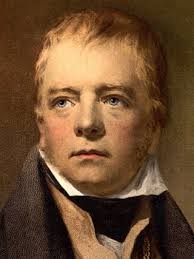
Walter Scott invented the historical novel — the genre in which the past comes alive. Before him, history belonged to chronicles and learned treatises. After him, Dumas, Flaubert, and Tolstoy would think about how to portray the people of the past from within.
He was born in Edinburgh in 1771. A childhood bout of polio left him lame. He trained in the law and collected Scottish folklore; his first publications were ballads and poems. Then came the novels: Waverley, Ivanhoe, Rob Roy, Quentin Durward.
Ivanhoe (1819) gives us chivalric England — Jews and Saxons, Richard the Lionheart, and the villain Bois-Guilbert. Scott could create characters still remembered two hundred years on.
Ruined by his publisher's debts, he worked until his death to pay them off, writing novels worth millions in the years that remained to him. He died in 1832, the debts nearly cleared.