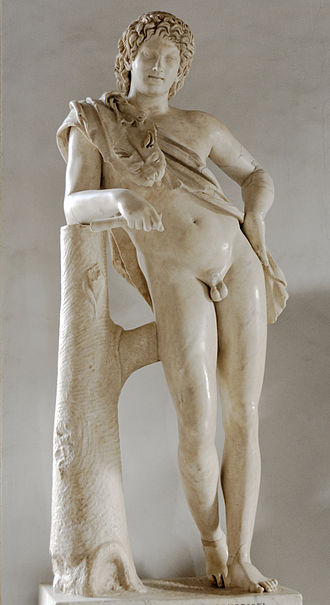
Praxiteles, one of the most famous sculptors of ancient Greece, lived in the fourth century BC. He was born in Athens, the city that was then the center of Greek art and culture, in an age of great change and invention — and he was among those who contributed most to the development of sculpture.
His best-known work is the Aphrodite of Cnidus, a genuine revolution in ancient art: the first sculpture to show the goddess Aphrodite naked, an unheard-of departure for its time. The work is marked by softness of form, a lyric tenderness, and the famous S-curve pose that became the signature of Praxiteles' style. His other known works include figures of Hera, Apollo, and Dionysus, which show the same distinctive approach to the human form.
Praxiteles was a true innovator, and his governing idea was to reveal the beauty and harmony of the human body. He was among the first sculptors to render the nude in a more natural and lifelike manner — a marked break with received convention. His contribution to culture was immense: his work shaped Hellenistic and Roman sculpture and the art of many later ages.
Success did not spare him difficulty or paradox. He was known for his perfectionism and the demands he made on himself, which at times brought him into conflict with patrons and clients; and his innovations were not always understood or appreciated by his contemporaries, which brought him disappointment and doubt.
Today, however, Praxiteles is counted among the greatest sculptors in history, and his works continue to astonish and inspire people the world over. So great was his contribution to art and culture that his name became a byword for perfection and beauty. His sculptures are still studied and admired by scholars and lovers of art, and his legacy lives on in the work of countless artists inspired by his way of seeing the human form. He remains a central figure in the history of art, and his works will go on inspiring and delighting for centuries to come.