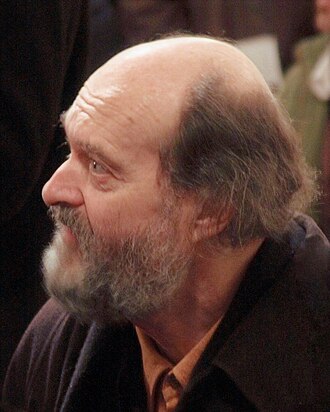
Arvo Pärt (b. 1935) is an Estonian composer.
In 1968 Pärt wrote "Credo," a provocative work that quoted Bach and ended in chaos. The Soviet authorities banned it, and Pärt fell silent for eight years.
In 1976 he returned with a new style — "tintinnabuli," from the Latin tintinnabulum, a little bell. Utter simplicity: one voice moves by step while another arpeggiates a triad. No dense chords, no development in the usual sense — only pure sound.
"Spiegel im Spiegel" ("Mirror in the Mirror") is eight minutes for piano and violin or cello, and one of the most beautiful pieces of the past century. It turns up in films, in the theater, at funerals.
Pärt emigrated in 1980, first to Austria and then to Germany. In 2010 he returned to Estonia, where he lives and works to this day.
Key works: "Spiegel im Spiegel," a meditation in sound; "Fratres," which exists in dozens of versions for different instruments; and "Tabula Rasa," for two violins, prepared piano, and chamber orchestra.