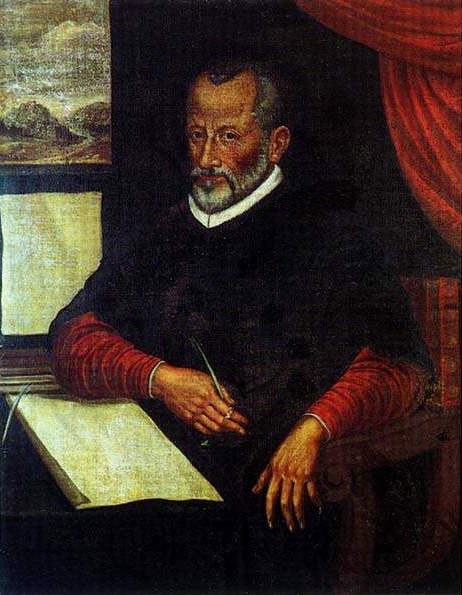
Giovanni Pierluigi da Palestrina (c. 1525–1594) was an Italian composer of the Renaissance.
The Council of Trent (1545–1563) weighed a ban on polyphony in church: the music had grown too intricate, and the words were being lost. Legend has it that Palestrina's Missa Papae Marcelli was what convinced the council fathers that polyphony could be both clear and devout — and so European choral music was saved.
Palestrina spent his whole working life in Rome, at St. Peter's Basilica and other churches. He wrote some 105 masses, 250 motets, and dozens of other works, and his style remained a required subject in every European conservatory well into the twentieth century.
Key works: the Missa Papae Marcelli, the legendary mass that saved polyphony; the motet Sicut cervus, Renaissance singing brought to perfection; and more than a hundred masses that together mark the summit of Renaissance polyphony.