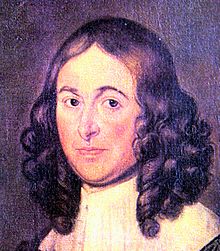
Thomas Nashe was a poet and satirist of the Elizabethan age. He was born in November 1567 at Lowestoft, in Suffolk, and studied at St John's College, Cambridge, though he never took his degree. In the summer of 1588, it appears, he moved to London, where he plunged at once into the literary life of the capital and joined the circle of the “University Wits,” whose members included Christopher Marlowe, Robert Greene and John Lyly.
Satire dominates Nashe's writing. His finest work, Pierce Penilesse, His Supplication to the Divell (1592), opens with an assault on the greed of the rich and broadens into a general picture of the vices of the day. The Anatomie of Absurditie (1589) is devoted to vain feminine folly. A deeper work, Christes Tears Over Jerusalem (1593), draws an analogy between London, sunk in its abominations, and the Jerusalem that was punished for its sins. Nashe's Lenten Stuffe (1599) is a mock-ornate panegyric in honour of the smoked herring of Yarmouth. For the stage he wrote the comedy Summers Last Will and Testament (1600); he also assisted Marlowe in the writing of Dido, Queen of Carthage, and was one of the authors of the scandalous Isle of Dogs (1597).
His Unfortunate Traveller, or the Life of Jack Wilton (1594) is the first English picaresque novel. The account of the adventurer Wilton's exploits in Germany and Italy rests on a number of half-authentic events. In this motley narrative the touching sits beside the horrifying, and hard realism is joined to an unbuttoned humour; what predominates, all the same, is a satirical picture of foreign manners. Nashe's energetic style and his knowledge of the psychology of society's lower depths make the novel vivid and absorbing.
Bibliography: The Anatomie of Absurditie (1589); Pierce Penilesse, His Supplication to the Divell (1592); Christes Tears Over Jerusalem (1593); The Unfortunate Traveller, or the Life of Jack Wilton (1594); Nashe's Lenten Stuffe (1599); Summers Last Will and Testament (1600).
A point worth noting: Nashe's Unfortunate Traveller is the first picaresque novel in the English language.