In 1863 Paris saw the Salon des Refusés, an exhibition for painters the jury of the official Salon had turned away. Napoleon III himself ordered it opened, so that the public could judge for itself. The public came — and laughed at a young painter's canvas, Luncheon on the Grass.
The picture shows a naked woman seated beside clothed men in modern dress. Not a nymph, not a goddess — simply a woman. And she looks straight at the viewer.
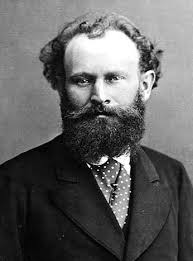
Édouard Manet was born in Paris in 1832, into a prosperous family. His father intended him for the law; the son failed the naval examination six times before his father consented to painting.
He studied under Thomas Couture and copied the old masters in the Louvre — Titian, Hals, Velázquez; he knew them by heart. But once he began painting for himself, it became clear that he had no wish to depict anything allegorically. Only what is.
Olympia, 1865: a naked courtesan lies on a bed, her eyes on the viewer, while a Black maid brings flowers from a client. All of it the plain reality of the Paris of the day. The scandal was enormous.
He liked Paris — the cafés, the boulevards, the races, the Opéra — and he painted it. He did not go off to Brittany for wild nature or climb into the mountains for romance. He painted what he saw from his window.
He died in 1883, before recognition came. Within a few years the Impressionists — Monet, Renoir, Degas — were calling him their forerunner.