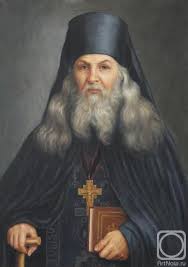
On October 24 the Church keeps the memory of the first elder of Optina, St Leo.
St Leo — in the world Lev Danilovich Nagolkin — was born in the town of Karachev in the province of Oryol. Of his family little is known: his parents were simple townsfolk, poor, it would seem, since Lev Danilovich, though a man of outstanding gifts of mind and character, had no means of setting up in trade or keeping a household of his own. He had to work for wages as the assistant of a merchant who dealt in hemp and hemp-seed oil in the town of Bolkhov in the same province. In those distant days the word for such an assistant was not yet current, and men of his station were called simply "the worker" or "the lad."
Lev Danilovich had the name of an honest and faithful lad, quick and shrewd, and so enjoyed his master's trust and respect. In the life of the future elder the Providence of God showed itself with particular clarity, turning every circumstance of life to spiritual profit: to them that love God, all things work together for good.
His occupation brought him into contact with people of the most varied ranks and conditions, and having an excellent memory, together with curiosity, keen observation and foresight, he acquired a great store of varied and useful knowledge. He came to know nearly the whole of Russia: the life of the gentry and the merchants, service in army and navy, the ways of the common people. All this knowledge served him afterwards as a spiritual director shepherding his flock.
Seeing the diligence and virtuous life of his "lad," the master offered him his daughter's hand; but Lev Danilovich had quite other plans, and refused the advantageous match outright.
In 1797, in his twenty-ninth year, the young man entered the monastery of Optina Pustyn and threw himself at once so zealously into the labours of monastic life that within two years those immoderate labours had undermined his robust health. More than once the future elder had to move from one monastery to another, now in search of a Spirit-bearing director, now wishing to hide from human fame. In 1801, at the Beloberezh hermitage, he was tonsured a monk with the name Leonid, ordained hierodeacon the same year, and then hieromonk.
So swift an ordination gave the humble monk no occasion for self-exaltation, nor did it quench his zeal; on the contrary, he grew in spirit. Once the choir brethren refused to sing the vigil, trying to force the superior to meet their demands. The superior would not yield to this unreasonable pressure and, to humble the self-willed brethren, ordered Father Leonid and one other brother to sing the vigil. Father Leonid had spent the whole day at his obedience, carting hay. Tired, covered with dust, without even having tasted supper, he went without a murmur to the kliros to serve the vigil. Such was the obedience of the future elder — and, as the holy fathers say, true elders are made of true obedient ones.
Even then the young hieromonk showed an uncommon love of man, and clear sight into souls. One brother, fallen into spiritual delusion, climbed the bell-tower and cried out for all to hear that he would leap down and not be dashed to pieces, for angels would catch him. Father Leonid was at that moment working at his obedience. Suddenly he dropped his work and ran to the bell-tower, where he was in time to seize the deluded man, already poised to jump, by the hem of his garment, and saved him from perishing in soul and body.
The young hieromonk so prospered in the spiritual life that it was plain to all around him, and in 1804 the brethren elected Father Leonid superior of the monastery. The election found the humble monk at the labours of obedience: he was brewing kvass for the brethren, having kept away from the voting. The brethren came in a body to the brewery, took the apron off their future superior, took the ladle from his hands, and carried him off to Oryol to be presented to Bishop Dositheus.
Office did not change Father Leonid's humble ways. On the monastery's business he would often set out in a plain cart with a single horse, and take the driver's seat himself. Once he had to go on monastery affairs to Karachev with one of the hieromonks of the community, Father Gabriel. Father Gabriel, preparing for the journey, laid out his festal attire. Coming out of doors, he saw, instead of the expected carriage and coachman, a cart with a little horse harnessed to it, and asked Father Leonid in astonishment:
"But where is the coachman?"
To which the superior replied:
"What! Three coachmen to one horse in my service? Thank you kindly! Sit up on the box, brother, and when you tire, I will take a turn. And what is this — a kamilavka-case and a cassock? Why, I do not take even a kamilavka with me. If you must carry such parade about, then sit in my place, and I will drive the horse."
And he mounted the box himself. The abashed Father Gabriel carried all his "parade" back to his cell, and begged the father superior's leave to sit in the coachman's place. Such a superior was Father Leonid.
The Lord sent him an experienced spiritual guide, the schemamonk Theodore, a disciple of the great elder Paisius Velichkovsky. Father Theodore settled at the Beloberezh hermitage in 1805; in 1807, not without God's Providence, a grave illness befell him: for nine days he took no food, and for three days lay in a lethargic sleep. After this, having passed, it would seem, through powerful spiritual experiences, he desired a more solitary and silent life.
Out of love and reverence for the elder a cell was built for him at once in the forest, two kilometres from the monastery, where he settled with another ascetic, the hieroschemamonk Cleopas, in the silence of the wilderness. Soon Father Leonid joined them, having voluntarily laid down the office of superior; here he received the private tonsure into the schema with the name Leo.
The three ascetics laboured in the depths of the forest until God's Providence bade them change their dwelling. The monastery's new superior did not like it that lay visitors and the monastery brethren turned to the hermits for spiritual direction. Then an accidental fire burned down their cell, and though they built a new one, they were not long to live in it. Father Theodore, ever persecuted through the envy of the enemy, was forced to depart to the Paleostrov hermitage, where he passed three sorrowful years. Father Leo, with the ailing Father Cleopas, moved in 1811 to the skete of Valaam, where the elder Theodore himself managed to follow the next year, and the fellow-initiates were reunited.
They spent some six years in the Valaam skete, and by their wisdom and spiritual stature drew many of the brethren who sought direction. They grew in spirit themselves, so that the local fool-for-Christ, Anton Ivanovich, said of them in his figurative way: "Their trade here has prospered." But the persecutions went on: the abbot of the monastery began to voice displeasure with the elders who, as he saw it, were robbing him of his right to be the sole spiritual director of the brethren.
Father Leo and Father Theodore (the ascetic Father Cleopas had died in 1816) moved to the Alexander-Svirsky monastery, where they laboured until the elder Theodore's death. After the elder's death Father Leo resolved to withdraw with his disciples to a more secluded place. Learning of his wish, many began to invite him to their communities — among them the brethren of the Ploshchansk hermitage and of the newly established skete at Optina Pustyn.
Father Leo made the pilgrimage to Kiev he had long desired, and, having venerated the relics of God's saints in the caves, declared his wish to go to Optina. The all-wise Lord, however, made his road not straight but through the Bogoroditsk hermitage of Ploshchansk, where at that time Father Macarius — the future elder of Optina, and the beloved disciple, fellow-labourer and fellow-initiate of St Leo — was praying fervently that God would grant him a spiritual guide. God's Providence brought them together during Father Leo's short half-year stay at Ploshchansk. That meeting made possible their later reunion at Optina, where St Leo arrived with six disciples in 1829, Father Macarius following him in 1834.
Optina became the last earthly dwelling of St Leo: here he lived twelve years, until his death in 1841. He became the first elder of Optina, the forefather of all the Optina elders, the instructor of St Macarius and of the great Optina elder St Ambrose.
The Optina brethren received Father Leo with great joy, as a gift from heaven. The Optina skete was then very poor and not yet fully built: around a little wooden church dedicated to the holy Prophet and Forerunner John, with its small wooden bell-tower, stood a few unplastered cottages roofed with board. The skete had as yet no wall; it was fenced only with wattle, and not all the way round at that — but around it murmured an ancient pine forest. On the north side of the skete lay the ground set aside for the apiary, and a small house intended for Father Leo, placed deliberately at a distance so that monks and laity alike might visit the elder without hindrance.
The superior, Father Moses, entrusted the whole brotherhood to the elder's spiritual direction, and himself became his spiritual child. Thus the elder guided the entire inner life of the community, and even the outward affairs of the monastery were settled under his spiritual direction. He had attained a high measure of spiritual stature, and came out in the full armour of spiritual strength to the new and great service to which God's Providence had called him.
St Leo was a great man of prayer. Living almost without pause amid human grief, sorrow and bustle, he dwelt at the same time without pause in prayer. One of his disciples related that in those rare minutes when the elder was left without people, he would sink so deep in prayer that he forgot his cell-attendant and did not hear what was said to him, so that the attendant had to repeat the same thing several times.
St Leo had a living faith in the Providence of God, and in every difficulty of life set his hope on the Lord. He wrote: "Our archpastor, upon slanders, is displeased with us. But the High Priest of the good things to come, the Lord our God, knows more than this, and consequently can better govern us. And so I say again: the Lord's will be done!" And: "The merciful Lord accomplishes all things and turns all things to His will and to our profit, though by means and outcomes which to all appearance are against us..."
When the enemy raised persecution against the elder through men who did not understand the nature of an elder's spiritual care, and the pressure of the bishop of Kaluga restricted him in receiving visitors, he might have been glad to rest and draw breath from his labours. Though he never took thought for his own ease, but always pitied the suffering, here too he committed himself in hope to the will of God: "God is mighty to help even without my unworthiness," he said.
Humility and meekness were native to him; no one ever saw him angry or irritated or despondent, no one ever heard him murmur. A peaceful spirit and joy attended him constantly. The elder said: "I live and walk before my God; I live for my neighbours, casting off all pretence and all fear of the world's judgement; I fear no one but God." So, hoping in the Lord, he stood unshaken amid persecutions, denunciations and slander, amid the assaults of enemies visible and invisible, like a rock amid the waves that beat upon it. The elder Theodore, his spiritual guide, called him "the humble lion."
Father Leo acquired high spiritual gifts: the gift of healing souls and bodies, the gift of undistracted unceasing prayer, the gift of spiritual discernment. He could grasp precisely, and show his spiritual children, what was pleasing or displeasing to God; he could judge truly of the state of other men's souls and spirits, and clearly distinguish the true spirit from the spirit of delusion — the working of God's grace from the enemy's deceit, however subtle and hidden. He had from the Lord the gift of clairvoyance as well: he read in the souls of his children the secrets of their hearts, their hidden thoughts, and reminded them of forgotten sins.
If need be, the elder could humble a man and rebuke him; but at the same time he understood to a hair what each could bear, and how and with what to comfort whom, so that even after a stern rebuke no one left the elder uncomforted. One of Father Leo's children recalled: "Sometimes the father would give me so stern and dread a scolding that I could scarcely keep my feet; but then he would humble himself like a child, and would so soothe and comfort me that my soul grew light and glad, and I would go from him peaceful and cheerful, as though he had praised me rather than reproached me."
In the elder's presence people felt peace, spiritual joy, quietness of heart. They often came with sorrows, with grief, and left his cell at peace, rejoicing. Another disciple recalled: "I noticed this too in myself while living in the monastery: sometimes anguish and despondency would fall on me, and thoughts would war on me cruelly. I would go to the father to be comforted in my sorrows, and at the very entrance to his cell everything would vanish in an instant, and in my heart I would suddenly feel stillness and joy. The father would ask, 'What have you come for?' — and you would not even know what to say. He would take oil from the lamp and anoint you, and give his blessing; and you would go from his cell with gladness of heart and peace of soul."
The elder knew whom to rebuke, and how. Once a newly arrived brother offended an old monk, and both came to Father Leo to complain. To everyone it was obvious that the newcomer was wholly at fault. But the elder judged otherwise. He said to the old monk: "Are you not ashamed to put yourself on a level with a novice? He has only just come from the world, his hair has not yet had time to grow; one cannot judge him strictly if he says what he should not. But you — how many years have you lived in the monastery, and you have not learned to attend to yourself!"
So they departed, the new brother triumphant, feeling himself fully vindicated. But when soon afterwards he came to the elder alone, the elder took him by the hand and said: "What is this you are doing, brother? You have only just come from the world, your hair has not had time to grow, and you are already offending old monks!" The unexpected admonition so struck the young brother that he begged forgiveness in deep contrition.
There was at Optina a brother who kept asking the elder's leave to wear chains. The elder, who removed chains from many, explained to this brother that salvation does not lie in chains. But he persisted. Then the saint resolved to show the would-be wearer of chains his true spiritual stature. Calling the blacksmith to him, the elder said: "When such-and-such a brother comes to you and asks you to make him chains, give him a good box on the ear."
When the brother next begged for chains, the elder sent him to the blacksmith. The brother ran joyfully to the smithy and said: "The father has blessed you to make me chains." The smith, busy at his work, dealt him a box on the ear with the words, "What chains for you?" The brother, unable to bear it, answered in kind — and both went to the elder for judgement. The smith, of course, went unpunished; but to the brother who wished to wear chains the elder said: "Where are you pushing yourself, to wear chains, when you could not bear a single box on the ear!"
The elder taught simplicity, sincerity, freedom from pretence, which draw down the grace of God: "No feigning, no guile, openness of soul — this is what is pleasing to the Lord who is humble of heart."
People are often possessed by an itch to teach, to give unasked-for instruction, to hand out corrections right and left. When the elder was asked whether one should make remarks to newer brethren and correct them, on seeing them careless in some of their conduct or doing something unseemly, St Leo answered: "If your duty is rather to attend to yourself; if you have no blessing from your superior for it, and know yourself to be subject to passions — then do not enter at all into matters and cases that do not concern you. Keep silence. To his own master each man stands or falls. Strive with all your might not to be a cause of stumbling to your neighbour. Physician, heal thyself!"
A townsman of Kozelsk, Semyon Ivanovich, told how St Leo taught him to bear sorrows: "In the thirties (of the last century — the nineteenth) I was engaged, as I was later too, in making clay pots. My mother and I lived in our own little house; we had no horse, but we had a decent cart. I would load the pots into that cart, borrow a horse from someone, and take the pots to market. So I got along. At that time a soldier, a Pole, was quartered in our house; but then he left us and went to the bad. Once, choosing his moment, he climbed into our yard and stole the wheels off our cart.
"I told my grief to Father Leonid and said that I knew the thief and could recover the wheels. 'Let it be, Semyon; do not go after your wheels,' the father answered. 'God has punished you: bear God's punishment, and by a small sorrow you will be delivered from great ones. But if you will not endure this small trial, you will be punished the more.' I followed the elder's counsel, and as he said, so it all came to pass.
"Before long that same Pole climbed into our yard again, dragged a sack of flour out of the barn, heaved it onto his shoulder and made to cross the vegetable garden; but at that moment my mother was coming through the garden and met him. 'Where are you carrying that?' she said. He dropped the sack of flour and fled.
"Soon after that came another case. We had a cow, and decided to sell her. We found a buyer, struck the bargain and took a deposit. But for some reason the buyer did not take the cow for several days; at last he took her home. And the very next night a thief broke into our yard and tore open the shed where the cow used to stand — no doubt to lead her away; but she was no longer there. So again, by the elder's prayers, the Lord delivered us from calamity.
"Many years later, after my mother's death, a third such case befell me. Passion Week was ending and the feast of Pascha drawing near. For some reason the thought came to me to move all my necessary belongings from my little house to my sister's next door. So I did. And as the first day of the feast came on, I locked up my house on every side and went to matins. Always before, I had spent that matins in joy; but now, I know not why, something lay uneasy on my soul. I come home from matins and look: the windows are out and the door unlocked. 'Well,' I think to myself, 'an evil man has been here.' And so there had been; but since all my necessary things had been moved to my sister's, he had gone away with next to nothing.
"So three times the prediction of Father Leonid was fulfilled in me: that if I bore a small punishment from God, God would punish me no further."
To the monastic brethren and lay visitors who came to him for spiritual counsel St Leo gave help in bodily ailments too, pointing them to tried remedies of the people. For treatment he chiefly used the so-called "bitter water," of which he sometimes went through more than a whole tub in a day. After the elder's death this water continued to be prepared and distributed in the monastery to those suffering from internal illnesses; but after him it no longer had the many-healing power to help against every disease that it had had, though against some it still availed.
Often the elder sent the suffering to Voronezh, to the relics of the then newly revealed saint of God, the holy hierarch Mitrofan. And often the sick returned to thank the elder for their recovery; sometimes the healing came even on the road. To many sick in soul and body the elder gave grace-filled help by anointing them with oil from the unquenchable lamp that burned in his cell before the Vladimir icon of the Mother of God.
The possessed were also brought to the elder. And there were not a few who themselves did not know they were possessed, and only in the elder's presence, when he exposed the delusion hidden in them, began to rage.
"Soon after my entry into Optina Pustyn (about 1832)," related Father Igumen P., "when Father Leo's cell-attendants were Father Gerontius, Father Macarius Gruzinov and Pavel Tambovtsev, a possessed peasant woman was brought to the elder who during her fits spoke in foreign tongues. The elder read the prayer over her some three times, anointed her with oil from the unquenchable lamp before the icon of the Mother of God, and gave her the oil to drink. The second time she was brought to the elder still ill; the third time, already healed. When Tambovtsev asked her to speak as she had before, in foreign tongues, she said: 'Ah, father, how should I speak foreign tongues? I can hardly speak my own, and can hardly walk. Glory be to God that my old sickness is gone.'"
Once a possessed woman was brought to the elder Father Leo by six men. The moment she saw the elder she fell down before him and cried out loudly: "That grey one there — he will drive me out! I have been in Kiev, in Moscow, in Voronezh, and no one drove me out; but now I shall go out." The elder read the prayer over her and anointed her with the holy oil from the lamp before the icon of the Mother of God. After the elder's prayers the possessed woman rose quietly and walked out of his cell. Thereafter she came to Optina every year in health; and after the elder's death she took earth from his grave, with faith, for other sick people, and they too received benefit from it.
"I remember," related the hieroschemamonk Anthony of the Kiev Caves, "a woman coming to the elder Father Leonid who had a wound on her breast. Casting shame aside, she uncovered it before the elder in the presence of all of us, his cell-attendants. The father, nothing doubting, dipped his forefinger in the oil of the lamp burning before the holy icon of the Mother of God, anointed the woman's wound, and sent her home. A week later the woman came back to the elder with thanks, and declared to us all that her wound had healed soon after the elder anointed it with the oil." "It happened often," Father Anthony would add, "that a sick man would come to the father scarcely dragging his feet, and go from him briskly and cheerfully, telling everyone his joy — that he was healed."
In September 1841 the elder began visibly to fail; he ceased to take food, and communicated daily of the Holy Mysteries of Christ. Before his end St Leo said to the children gathered round him: "This day the mercy of God will be upon me." The elder crossed himself and repeated many times, "Glory be to God!", exulting in soul amid grievous bodily sufferings. His face grew ever brighter, and he could no longer hide the spiritual joy he felt in hope of the recompense to come from the Lord.
In his illness the elder's body and hands were cold, and he said to his beloved children and to his cell-attendant Jacob: "If I receive God's mercy, my body will grow warm and be warm." After his death the elder's body stood three days in the church without giving off the least odour of death, and it warmed all his clothing and even the lower board of the coffin. On the day of his death the vigil was being served in honour of the holy fathers of the Seven Ecumenical Councils.
In 1996 St Leo was numbered among the locally venerated saints of Optina Pustyn, and in August 2000, by the Jubilee Council of Bishops of the Russian Orthodox Church, he was glorified for veneration by the whole Church. The elder's relics rest in the Vladimir church of Optina Pustyn.