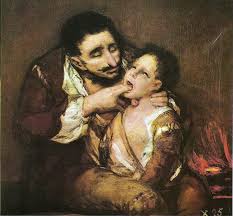
“The Book of Lazaro de Tormes” is the conventional title for a cycle of works built around a single hero, its foundation the anonymously published mid-sixteenth-century “Life of Lazarillo…” — the story of a boy whom brutal poverty and hunger force into becoming the wiliest of rogues.
The tale appeared at the very height of the Spanish Inquisition and was later banned by the Catholic Church — hardly surprising, since it upended the received values of the age of Charles V: blind devotion to the “code of honor,” showy heroics, the hypocritical observance of religious rites. In time it fathered an immense literary tradition and became a landmark in the history of world literature, one of the most brilliant works of the Renaissance. It was from this little book that the Spanish picaresque novel — and, more broadly, the modern European novel — took its beginning.
Its central figure, a trickster and “anti-hero,” proved so potent a symbol of the age that neither the national literature of Spain nor world literature as a whole is now imaginable without this text. Many-angled and polyphonic, the Toledo town crier affectionately nicknamed Lazarillo has rightly been recognized as a national archetype, taking his place beside the foremost hero of Spanish letters, the ingenious hidalgo Don Quixote of La Mancha.