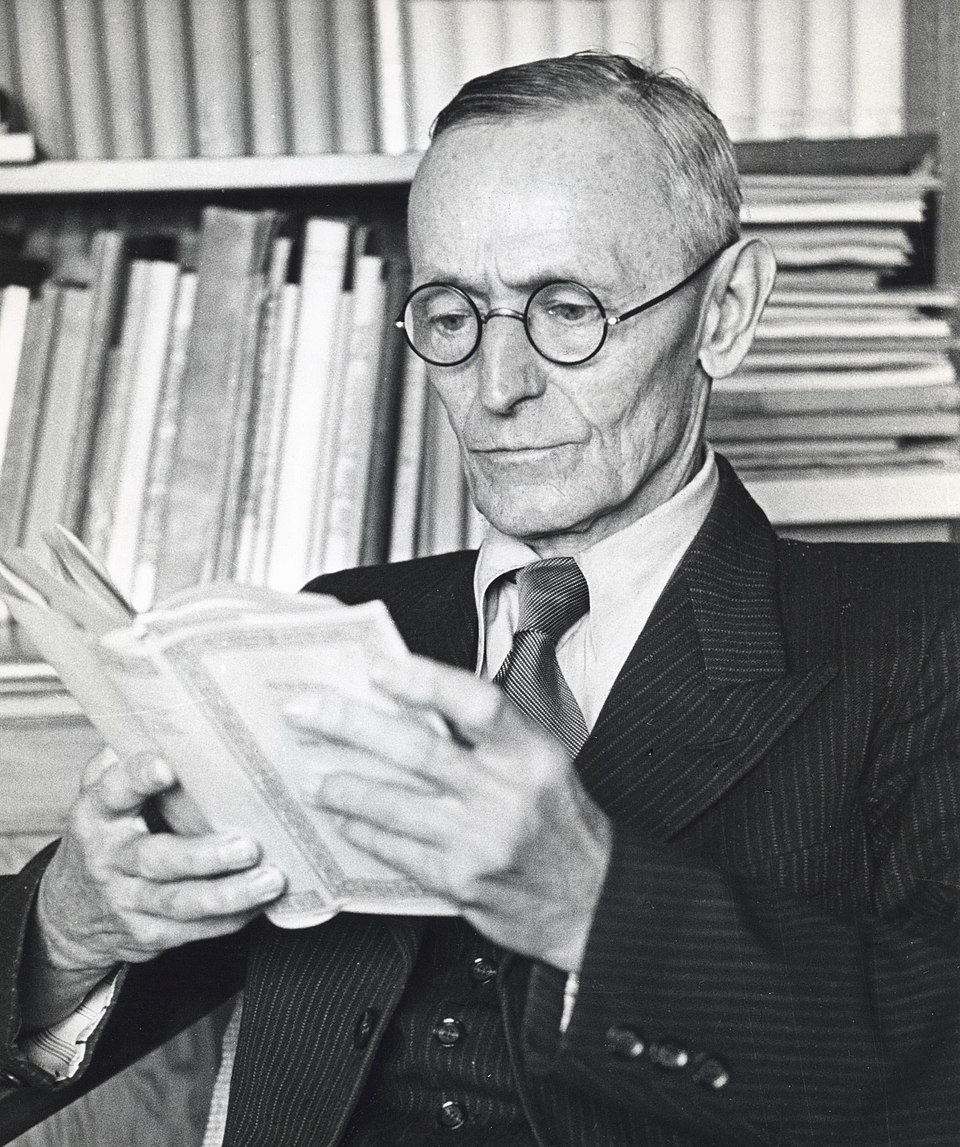
Hermann Hesse is among the most absorbing and difficult writers of the twentieth century. Born in a small German town, he grew up surrounded by literature and music, in an age of great upheaval whose center was the First World War — an experience that shaped his whole outlook. Conscripted into the army, he soon deserted, a turning point in his life: in Germany the act was read as betrayal, but for Hesse it was a step on the way to pacifism.
His principal works are novels that have become classics of world literature. Steppenwolf, perhaps the most famous of them, was written at a moment of personal crisis: the story of a young man trying to find his place in the world and confronting, in the search, the dark side of his own psyche. Other notable books — Demian and The Journey to the East — work the same ground of identity, spirituality, and the search for a life's meaning.
Hesse's central ideas grew out of his pacifism and his quarrel with bourgeois society. True freedom and happiness, he believed, could be won only by renouncing material values and turning toward the inner life. His books left a considerable mark on the culture, above all in the 1960s, when they became the bible of the youth movement: Hesse turned into an emblem of revolt and nonconformity, and his ideas set a whole generation searching for new values and a new sense of life.
His own life was full of hardship and paradox. His stand against the war forced him out of Germany, and he spent most of his years in Switzerland. Prized though his work was in certain circles, he long remained unknown to the wider public; only in the 1960s did his books become bestsellers, and he received the Nobel Prize in Literature — recognition of his contribution, and proof that his ideas had at last found their readers.
Hesse matters now because his preoccupations — the search for meaning, the primacy of the inner world, the need to let go of material things — have lost none of their urgency. His books still send readers off in search of new values and a new sense of their lives, and his legacy as writer and thinker endures. For all the difficulties and contradictions, he remains one of the most compelling and influential writers of the twentieth century, and his work will go on being read and studied for generations.