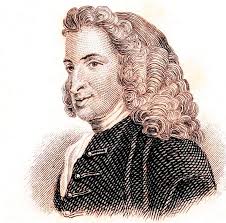
Henry Fielding (1707–1754) was a celebrated English writer of the eighteenth century and one of the founders of the European realist novel. His father, an officer who rose by the end of his life to the rank of lieutenant-general, belonged to an impoverished junior branch of the comital house of Derby. Fielding was educated at Eton, one of the most aristocratic schools in England; but want of means, it seems, obliged him to abandon the University of Leiden, where he had studied for about two years, without finishing. Back in London and casting about for a livelihood, the young Fielding turned to writing for the stage.
In 1737 he entered the Temple as a student of law, and in 1740 was called to the bar. To the same period belongs the beginning of his work in journalism. From 1739 to 1741 he published The Champion, a journal in imitation of Addison's Spectator; in 1745 he brought out the anti-Tory True Patriot; and in later years came The Jacobite's Journal (1747–1748) and The Covent-Garden Journal (1752). At the end of 1748 Fielding was appointed justice of the peace for Westminster, a post he retained to the end of his life. The duties it entailed absorbed all his strength and finally broke his health. In 1754, on his doctors' advice, he undertook a sea voyage to Lisbon, where he died soon after arriving; those last months of his life he described in the Journal of a Voyage to Lisbon, published posthumously in 1755.
His works: The Masquerade (1728); Love in Several Masques (1728); Rape upon Rape, or the Justice Caught in His Own Trap (1730); The Temple Beau (1730); The Author's Farce (1730); The Letter Writers (1731); The Tragedy of Tragedies; or, The Life and Death of Tom Thumb (1731); The Grub-Street Opera (1731); The Modern Husband (1732); The Lottery (1732); The Covent Garden Tragedy (1732); The Miser (1732); The Intriguing Chambermaid (1734); Pasquin (1736); Eurydice Hiss'd (1737); The Historical Register for the Year 1736 (1737); An Apology for the Life of Mrs. Shamela Andrews (1741); The History of the Adventures of Joseph Andrews and his Friend, Mr. Abraham Adams (1742); The Life and Death of Jonathan Wild, the Great (1743); The Female Husband, or the Surprising History of Mrs Mary alias Mr George Hamilton (1746); The History of Tom Jones, a Foundling (1749); A Journey from this World to the Next (1749); Amelia (1751); The Covent Garden Journal (1752); Journal of a Voyage to Lisbon (1755); and The Fathers: Or, the Good-Natur'd Man (1778).