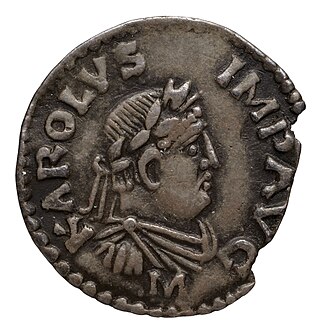
Charlemagne (742–814) was king of the Franks and the first emperor the West had seen since the fall of Rome. On Christmas night in the year 800, Pope Leo III crowned him in St. Peter's Basilica. The Western Roman Empire had risen again — in a new guise.
It was political theater with profound consequences. Charlemagne united most of Western Europe, from the Pyrenees to the Elbe. But the territory mattered less than the idea: legitimate authority existed in the West once more, and it was bound to Rome and to Christianity.
Then there was the Carolingian Renaissance. The finest scholars of the age gathered at Charlemagne's court; ancient texts were copied, schools founded. Without that effort, a large part of the Latin classics would have been lost.
After his death the empire was divided among his grandsons by the Treaty of Verdun in 843. Its three parts became the prototypes of France, Germany, and the lands between. The map of Europe, in its broad outlines, was drawn then.
Charlemagne stands at a point of intersection: barbarian chieftain, Roman emperor, Christian sovereign, and European statesman, all at once.