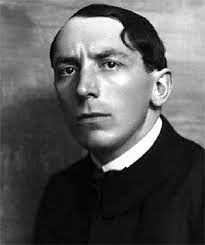
Umberto Boccioni is one of the most intriguing and enigmatic painters of the early twentieth century. He was born in Italy at a moment when the country was only beginning to stir from a long spell of cultural stagnation, and he belonged to the movement that set out to revolutionise art and culture itself — Futurism. Born in Italy, the movement was devoted to the glorification of speed, power and motion, and Boccioni became one of its leading figures.
His canvases are true masterpieces of their moment. He painted cars, horses, bicycles, even aeroplanes, showing how they might conquer time and space. These are not mere pictures of machinery but the embodiment of an idea: that the future must be fast, strong and pitiless. Among his best-known works are The City Rises and the sculpture Unique Forms of Continuity in Space, which display his singular style and approach to art.
Boccioni was not only a painter but a philosopher, deeply preoccupied with the future of humanity. He believed that art should not merely reflect reality but serve as an instrument for building a new world. His ideas of speed, power and motion became the foundation of the Futurist movement and inspired painters, writers and musicians alike. He was a genuine visionary, foreseeing a future in which machines and technology would govern human life.
Yet his life was short and tragic. He died at thirty-three, in a fall from a horse — a mode of transport far removed from the Futurist ideals he professed. The tragedy came as a shock to his friends and fellow travellers, who had seen in him a genius and a prophet. Boccioni was a man of contradictions: a Futurist who loved horses, an artist who put his faith in the machine. His life was a tragedy in its own right, proof that even the boldest ideas and dreams can be destroyed in a minute.
Short as his life was, Boccioni left a legacy that continues to inspire painters, writers and musicians to this day. His ideas of speed, power and motion passed into the foundations of modern culture, and his paintings remain masterpieces of a singular style. Boccioni is not simply a painter but the emblem of an age full of hopes and dreams of the future. He showed that art can be more than a mirror of reality — that it can be an instrument for making a new world — and that is what makes him one of the most important artists of the twentieth century.