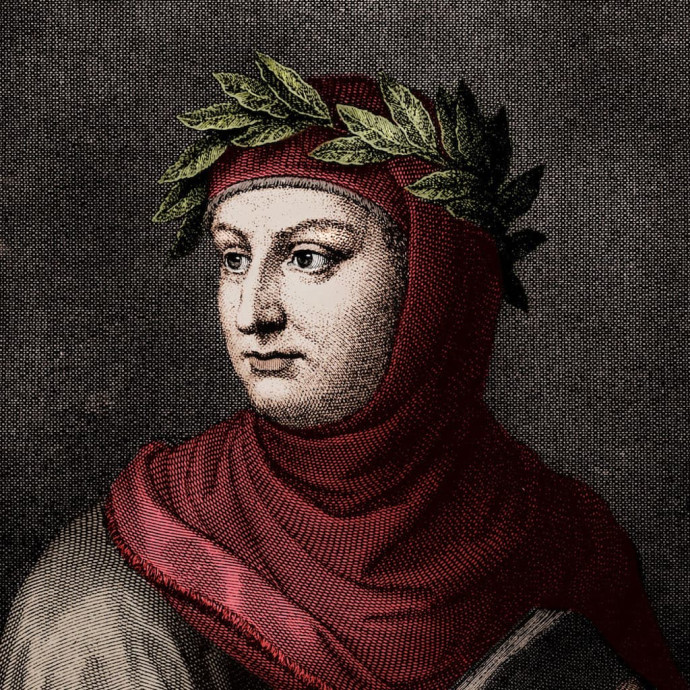
Giovanni Boccaccio was an Italian writer of the early Renaissance whose influence on European culture was profound, and one of the founders of humanism.
He was born in Italy in 1313; the exact date and place are unknown, and he spent his childhood in Florence. His father was a merchant, his mother came of a noble family. He studied law in Naples but was soon so absorbed in literature that his official subjects fell away, and before long he knew he wanted to devote his life to writing.
Life and career
Like many of his celebrated contemporaries, Boccaccio had a muse — his beloved Fiammetta. In 1348 he returned to Florence and, after his father's death, became guardian to his younger brother. His native city entrusted him with public office and sent him on diplomatic missions to Padua, the Romagna, Avignon, and elsewhere. His friendship with Petrarch began in 1350, and the two writers often worked in close collaboration.
Works that changed the world
The legendary Decameron, completed in 1358, left its mark on all subsequent European literature: Shakespeare, Chaucer, Eliot, Tennyson, Keats, Longfellow, and Swinburne all drew inspiration from it. Boccaccio himself admired his contemporaries — above all Dante, on whose work he lectured in 1373.
His pen also produced many works drawn from classical mythology, along with poems in the vernacular and in Latin: The Genealogy of the Pagan Gods, The Corbaccio, The Elegy of Lady Fiammetta. There are biographies in his bibliography as well — A Short Treatise in Praise of Dante, On Famous Women, On the Fates of Illustrious Men.
In the twilight of his life Boccaccio lost faith in the ideal of love. His health declined markedly, and a note of sorrow and bitterness sounded ever more often in his writing. The news of the death of his idol, Petrarch, dealt his health irreparable harm; a year and a half later, on 21 December 1375, the Italian humanist died himself. His works passed to the monastery of Santo Spirito in Florence.