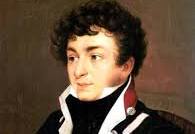
Konstantin Batyushkov wrote poems about joy and beauty — then lost his mind and spent thirty-four years in madness without writing a line. Pushkin called it the most terrible tragedy of all.
Born in Vologda in 1787, he fought in the wars of 1807–1814 and saw Borodino and Leipzig. His was “light poetry” — anthological, sensuous, about wine and love.
“My Penates” is a verse epistle to a friend, a picture of ideal seclusion; “The Dying Tasso,” a poem about a poet denied recognition; “On the Ruins of a Castle in Sweden,” an elegy.
The first signs of illness came in 1821; by 1822, total darkness. He lived in Vologda with his nephew and died in 1855. In thirty years — not a word.
ElsewhereWikipedia
A voice in the arc — one law of history, in figures. More of the 19th century: the whole age at once →
The arc · The 21 stations · The grammar of history · The seven idols and all 53 collapses · The books · All the figures · Who makes this · Russian version
© A.M.Sh. Write: hello@thegreenwhy.org