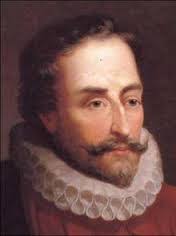
Mateo Alemán was a Spanish writer, author of one of the most celebrated of all picaresque novels, Guzmán de Alfarache (1599–1605). He also produced a poetic account of the life of St Anthony of Padua and an Ortografía Castellana, composed during one of his voyages to Mexico, but his fame rests chiefly on the satirical Guzmán. The novel succeeded so spectacularly that its first part was at once reprinted in three different places, ran through twenty-six editions and fifty thousand copies over the next six years, and was translated into French and Italian. The second part, published in 1605, carried the subtitle The Watchtower of Human Life.
Alemán's novel stands among the most renowned Spanish books of the Golden Age; it spawned a host of imitations and helped establish the fashion for a literature that reproduced reality unadorned.