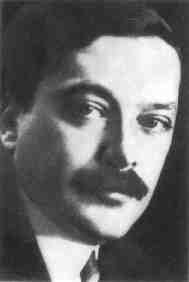
Mark Aldanov is one of those figures who seem enigmatic and compelling at first sight. He was born in Petersburg, in an age of great upheavals that would shape his destiny as a writer. Trained as a chemist, he found that his true vocation lay in literature. In 1919 he left Petersburg on a long journey that took him first to Paris, then to New York, and then to Paris again.
Over the course of his career Aldanov wrote more than a dozen historical novels, exploring the French Revolution, the Napoleonic wars, and the Russian terror of the nineteenth century. His books are not mere historical reconstructions but a searching analysis of human nature and of the workings of society. The conclusion he draws is stark: revolutions do not liberate; they reproduce tyranny in a new guise. He shows how idealists, driven by lofty convictions, can become executioners, sacrificing other people’s lives to their idea.
The questions Aldanov raised belong not only to his time but to all times. Is there any idea worth dying for? His answer is given with a bitter caution, an invitation to reckon the price we pay for our convictions. His last novel, “Suicide,” is among the most vivid expressions of this theme: a study of people who kill themselves, or others, for the sake of what they believe.
His own life was full of hardship and paradox. He watched the revolution from the sidelines and forgave it nothing; that resentment and disenchantment run through his books, with their indictment of revolutionary terror and ideological violence. Living in emigration, he remained faithful to his convictions and went on writing even when it was difficult and unfashionable to do so.
Aldanov remains an important figure in Russian literature — for his novels, but also for the questions he asked. His anatomy of revolutions and ideologies has lost none of its relevance in a world that keeps producing new upheavals. He teaches wariness toward ideas that demand sacrifices, and asks us to weigh what our convictions cost. His books are not simply historical fiction but philosophical meditations on human nature and society, and they continue to unsettle and inspire readers today.