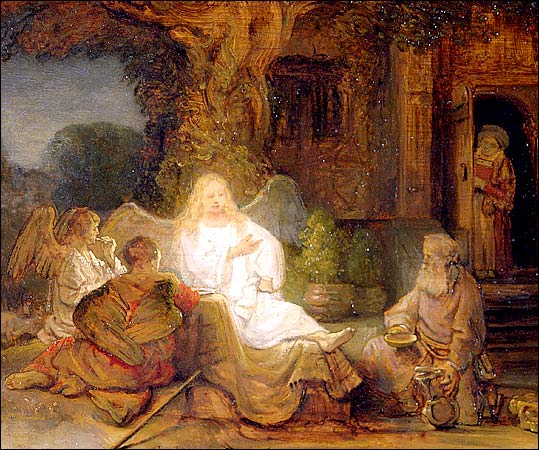
Abraham is one of the most compelling figures in the history of philosophy and theology. He lived in a remote age, when the world was utterly different, yet his ideas and his questions have not aged. Born in Ur, a city of the Sumerian civilization, he became one of the central figures of biblical history, and he is counted among the first human beings to ask what life means and what justice requires.
Of principal works, in the classical sense, Abraham of course left none. Yet his dialogue with God over the fate of the city of Sodom may fairly be called one of the most important philosophical texts in history. In that dialogue Abraham does not simply pray or plead — he argues, he bargains, for the lives of others. "Will You indeed sweep away the righteous with the wicked?" he asks — and receives an answer that establishes a principle: a righteous minority can save an unrighteous majority.
His ideas about justice, morality, and the relation between the righteous and the wicked still shape culture and philosophy. He showed that even in the hardest circumstances a compromise can be found and many lives spared. His question about the fate of Sodom has never been closed — proof enough that his ideas remain alive.
Abraham's life was not an easy one. He met with difficulty and paradox at every turn, yet he held to his principles. He was prepared to take risks and to argue with God for the sake of saving others — the mark of a man of strong will and firm conviction. Yet the same dialogue shows him equally ready to compromise, to search for solutions that could satisfy all sides.
Abraham matters today because his ideas about justice, morality, and responsibility have lost none of their force. His question about the fate of Sodom stands open still, reminding us that the questions of life's meaning and of justice must be asked again and again. We can learn from his example and carry his principles into daily life. He showed that a single person can change the world, if he is willing to take the risk and argue for what he believes. His legacy continues to inspire and to move people, and it keeps him among the most compelling and important figures in the history of philosophy and theology.