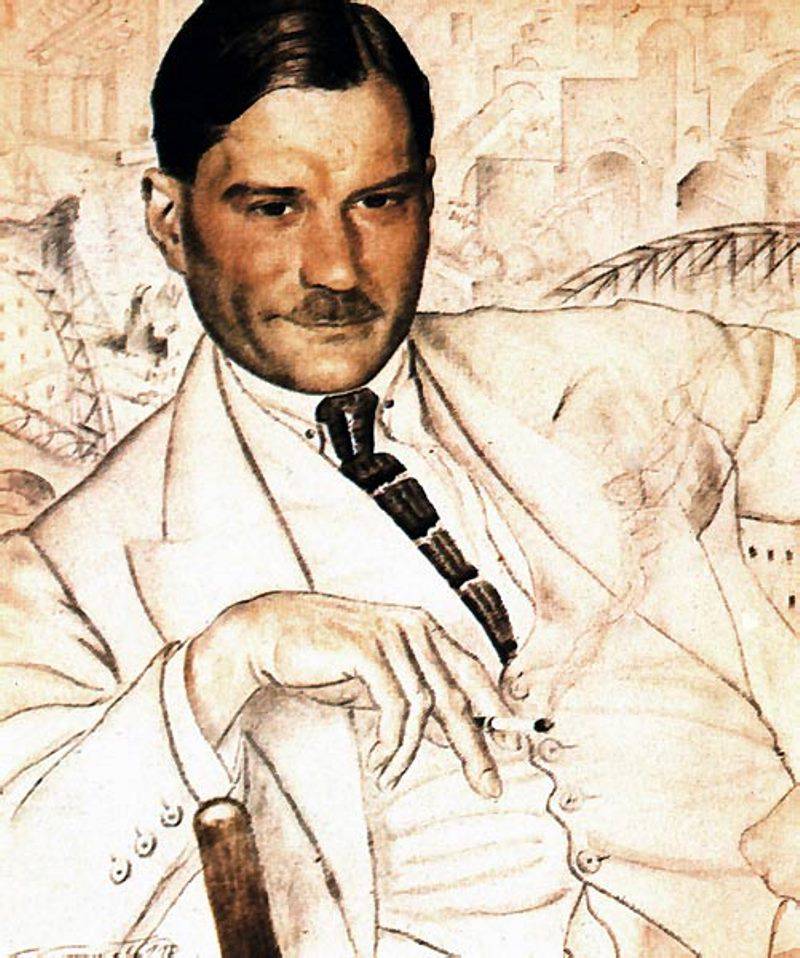
Yevgeny Zamyatin stands among the most interesting and influential writers of the twentieth century. Born in Russia at the close of the nineteenth, he lived through an age of vast upheaval, when the old Russia was collapsing and the new one had barely begun to take shape. He was a man deeply bound to his country, yet also a free thinker who was never afraid to challenge power and tradition.
His most celebrated work is the dystopian novel We, written in the early 1920s. It anticipated many of the ideas that would later underpin such classics as George Orwell's Nineteen Eighty-Four and Aldous Huxley's Brave New World. Orwell himself acknowledged that without Zamyatin his famous novel would not have existed — hardly surprising, since We was already grappling with totalitarianism, conformism, and the suppression of individual freedom.
Zamyatin's ideas were revolutionary for their time, and he became one of the first writers to turn a critical eye on the ideology of Soviet power. His work is steeped in satire and irony; he did not hesitate to mock the absurdity and hypocrisy of those in authority. He was a genuine thinker, unafraid of power or convention, and his writing has lost none of its relevance.
His life, however, was far from easy. After the publication of We he was forced out of the Soviet Union and lived out his exile in France. It was a hard time for him, torn as he was between love for his homeland and hatred of the totalitarian regime that had taken root there. Yet despite everything he went on writing and working, and his books continued to inspire and to influence others.
Zamyatin matters today because his ideas and his fiction remain alive and urgent. His dystopias warn us of the dangers of totalitarianism and conformity; his satire and irony remind us why critical thought and individual freedom are worth defending. He was a true visionary, and his work continues to inspire writers, artists, and thinkers across the world. His legacy is a reminder that literature has the power to change the world — and that thoughts and ideas can prove mightier than any regime or ideology.