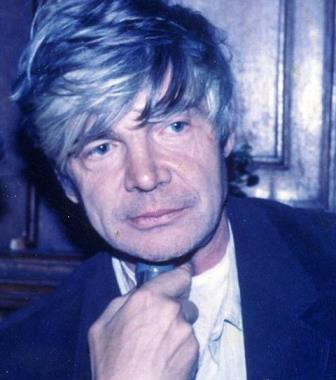
Venedikt Yerofeyev is one of the most intriguing and enigmatic writers of the Soviet era. Born in a small town, he found his way into Moscow's literary world, where his work was at once in demand and misunderstood. He lived at a time when Soviet literature was kept under strict control, yet he managed to produce writing that slipped past the boundaries of the conventional — a singular fusion of absurdity, philosophy and tragedy that captivates readers to this day.
His principal — and arguably his only major — work is the prose poem Moscow to the End of the Line (Moscow–Petushki), which became a cult book of late Soviet literature. On its surface it is the hero's journey from Moscow to Petushki; in truth it is a journey through a life — through thought, through philosophy, through the absurd. Yerofeyev contrived to write something at once lyrical, philosophical and tragic. Composed in the hardest of times for its author, it remains among the most compelling and pertinent works of Soviet literature.
Yerofeyev was a writer unafraid to say what he thought, however unexpected or unorthodox. His key ideas, his contribution to the culture, lie in that marriage of the absurd and the philosophical which he achieved on the page. Unafraid to experiment, to invent new forms and genres — this is exactly what makes his work so singular and so compelling — he created a new kind of literature: philosophical, lyrical and tragic all at once.
His life, though, was not an easy one. It was riddled with hardships and paradoxes that still puzzle and fascinate his biographers. He lived on the margins of Soviet literature, yet his work was sought out and loved by many; he spoke his mind freely, yet what he wrote was often banned or censored. These are the paradoxes of his character and his fate, and they continue to draw readers to him.
Yerofeyev matters today because his work has lost none of its relevance or its interest. Moscow to the End of the Line is a book that does not age; its blend of absurdity, philosophy and tragedy holds readers as firmly as ever. His writing shows how literature can be philosophical, lyrical and tragic at once — how it can break out of convention altogether. Yerofeyev continues to inspire and to captivate, and his work is essential reading for anyone who cares about literature and culture.