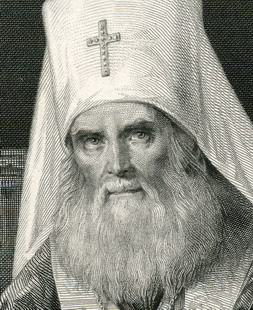
Vasily Drozdov, known to us as Metropolitan Filaret, was one of the most interesting and influential religious thinkers of his time. Living through an age of turbulent change, he contrived to leave an indelible mark on the history of Russia. Born into a priest's family, Filaret was raised from childhood to the service of the faith and of people, and that upbringing determined the whole of his later life.
Metropolitan Filaret Drozdov left behind a great many works, among which a special place belongs to the text of the manifesto emancipating the serfs, written at the request of Alexander II. That act became a landmark in Russian history, leading to a fundamental transformation of the country's social order. His catechism, moreover, was taught in schools for more than half a century, shaping the outlook of several generations of Russians.
The central idea of Metropolitan Filaret was a striving for social justice and for harmony among people. He believed that the true service of God consists in the service of one's fellow men, and that every human being possesses equal rights and possibilities. Presiding over the see of Moscow for forty-six years, he more than once used his position to halt repression and to defend those in need. His legacy is not only his written work but the countless lives his labours touched.
The life of Metropolitan Filaret was filled with difficulty and paradox. He was a man of faith living in an era of change and reform, and his position was often a contradictory one. Yet he never wavered in his convictions, even when holding to them was hard — testimony to the strength of his character and the depth of his beliefs. Through every complication he remained true to himself and to his mission, which makes his personality all the more interesting and inspiring.
Metropolitan Filaret Drozdov matters to us today because his ideas of social justice, compassion and human equality remain current. His legacy reminds us that any person can make a difference by using their position and opportunities to make the world better. His example shows that true leadership lies not in power but in service to others, and that faith can be a powerful instrument of positive change. Studying his life and works, we may learn from him important lessons that will help us build a more just and harmonious society.