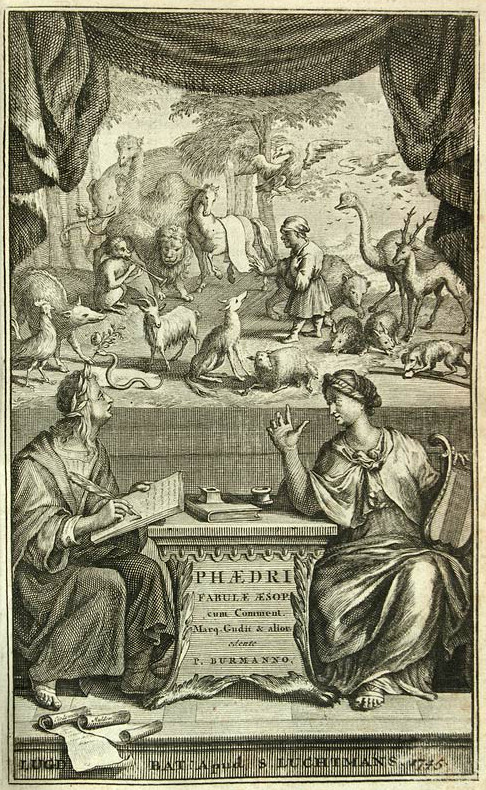
Phaedrus is one of the best-known Roman fabulists, active in the first century AD. He was a freedman of the emperor Augustus, which speaks to a fairly elevated social standing for the time. Born, in all likelihood, into slavery, Phaedrus managed to climb the social ladder and make himself a famous writer — a rare feat in ancient Rome.
His principal contribution to literature is his five books of fables, in which he rendered the fables of Aesop into Latin verse, adding plots of his own invention along the way. His work became the model of the genre in Roman literature and exerted a considerable influence on the development of European letters. The fables were written in an accessible, lucid manner, allowing readers to absorb with ease the moral lessons and the true meanings hidden beneath simple stories.
Morality and didacticism were the core of Phaedrus's enterprise. He used the fable as an instrument for conveying vital lessons about life and the values of society. His works entertained, but they also taught — justice, honesty, wisdom. They reflected, too, the realities of ancient Rome, offering us a window onto the life and troubles of the age. His contribution to culture lies in the popularisation of the fable and in the creation of new plots that have entered the classical canon of world literature.
His life, however, was not without hardship. As a freedman he lived with social uncertainty and constant pressure from his former master. Nor were his works always well received by contemporaries; he met with criticism and even persecution. Despite all this, Phaedrus went on writing, leaving behind a rich literary legacy.
Phaedrus remains an important figure in literature and culture today. His fables are still read and studied throughout the world, and their moral lessons keep their force for modern society. His contribution to the fable as a literary genre is beyond price, and his works continue to inspire writers and artists. His life, moreover, is proof that a man could rise out of slavery to become a celebrated figure of culture — an inspiring example for anyone striving to overcome social barriers and reach their goals.