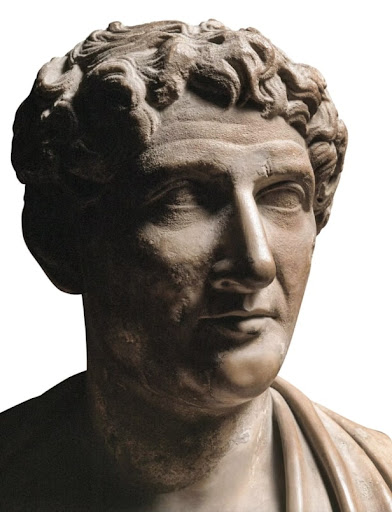
Publius Ovidius Naso (43 BC – AD 17) was a Roman poet, remembered above all for the Metamorphoses and The Art of Love, and for his elegies — the Amores and the Tristia, the sorrowful elegies of his exile.
He was born on 20 March 43 BC — the year 711 from the founding of Rome — at Sulmona, in the country of the Paeligni, a Sabine hill tribe living east of Latium. The place and date of his birth Ovid records with precision in one of the Tristia (IV, 10). His family had long belonged to the equestrian order; his father was a man of means and gave his sons a good education. Attending the schools of celebrated teachers in Rome, Ovid showed a passion for poetry from his earliest years: in that same elegy he confesses that even when prose was required of him, verse would slip from his pen unbidden.
Obedient to his father's wishes, he entered public service, but after holding only a few minor offices he gave it up, preferring poetry to everything else. Married early at his parents' urging, he was soon divorced; a second marriage was likewise brief and unhappy; only the third, to a woman who already had a daughter by her first husband, proved lasting and, by all appearances, happy. Ovid had no children of his own. Having rounded out his education with travels to Athens, Asia Minor and Sicily, he made his literary debut, was noticed at once, and won the friendship of eminent poets, among them Horace and Propertius. He himself regretted that Tibullus's early death had cut short a closer intimacy, and that Virgil, who did not live in Rome, he had managed only to glimpse.
In AD 8 Augustus, for reasons that have never been fully explained, banished Ovid to the town of Tomis, where he died in the year 17.