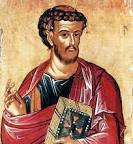
Luke the Apostle and Evangelist, author of the Gospel that bears his name and of the Acts of the Apostles, is venerated as a saint throughout the Christian tradition and honoured as the patron of physicians and painters.
By tradition he was a Greek, possibly born at Antioch, and a physician by profession — a calling consonant with his attention to detail and his care for people. He was not one of the original Twelve; he became instead a close companion of the apostle Paul, joining him on his missionary journeys and serving as his helper.
His Gospel is distinguished from the others by its emphasis on mercy, love and social justice; it gives particular attention to the place of women in the ministry of Jesus, and describes many miracles and parables. In the Acts of the Apostles he recounts the history of the early Christian church — the deeds of the apostles, the spread of Christianity, and Paul's missionary labours.
Tradition holds that Luke was put to death as a martyr for his faith, though the precise circumstances of his end remain unclear; some sources say he died in Greece at the age of eighty-four. He is honoured as a saint in the Orthodox, Catholic and other Christian traditions, his memory kept on 18 October (new style) in the Orthodox Church and on 31 October among Catholics.
The apostle Luke stands as an emblem of devotion, mercy and service.