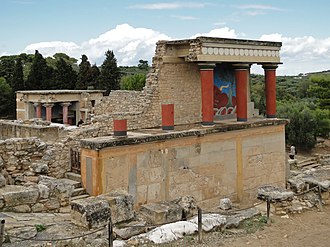
The frescoes of the Palace of Knossos are the work of an unknown artist who lived on the Greek island of Crete between the seventeenth and fifteenth centuries BC — the high noon of Minoan civilization, celebrated for its singular cultural and artistic achievements. Whoever stood behind these masterpieces remains anonymous, yet the work itself has gone on inspiring and astonishing viewers for centuries.
Chief among them are the famous frescoes known as "La Parisienne," the "Bull-Leaping" fresco, "The Prince of the Lilies," and "The Dolphins." Dynamism, brilliance of color, and an unmistakable delight in living set them apart from the rest of ancient art. They display not only extraordinary craftsmanship and taste; they also open a window onto the life and culture of the Minoans.
The artist's governing idea was to catch the beauty and energy of life itself. His frescoes show people, animals, and plants in motion, lending them a vitality that was revolutionary for its time and laid a foundation for the later development of European art. His contribution to culture lies not only in what he achieved as a painter but in what he has allowed us to understand about Minoan civilization and its place in history.
Little as we know of the man, his life and work were not without their difficulties and paradoxes. The greatest of these is that his frescoes were made when art was still in its infancy — and yet they display a mastery and refinement that many artists of his era never approached.
The frescoes of Knossos still matter because they belong to our shared cultural inheritance. They inspire artists, designers, and anyone drawn to art and history; they remind us why that inheritance is worth preserving, and why art must go on being made and refined. They are not merely works of art but a window into the past — one that helps us understand our own history and culture more clearly.