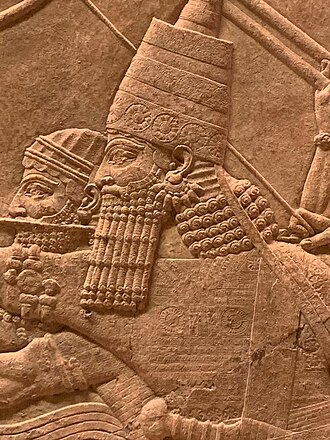
The reliefs of the palace of Ashurbanipal are not so much a name as an entire epoch in the history of art. This is the seventh century BC, the high noon of the Assyrian empire, when kings raised magnificent palaces and created masterpieces that would astonish viewers for centuries. The reliefs are a collection of carved stone panels made in Nineveh, the Assyrian capital, and they stand among the most impressive achievements of ancient art.
Among them a special place belongs to the scenes of the royal lion hunt. These works astonish by their anatomical precision, their drama, their rendering of movement. The viewer can almost feel the suffering of the wounded animals, and see the power and majesty of the Assyrian kings. The reliefs are kept in the British Museum and are counted among the greatest works of the ancient world. They display not only the mastery of the Assyrian carvers but give us a window onto the life and culture of the people of that age.
The palace reliefs embody the governing ideas of Assyrian art: the union of realism and symbolism, the projection of power and majesty. They also open to us the cultural and historical settings in which they were made. These works are not only masterpieces but historical documents of the first importance, helping us grasp the values and beliefs of the people who lived then.
Yet the fate of the reliefs was not simple. Created in the seventh century BC, they were lost to the world after the fall of the Assyrian empire, and only in the nineteenth century were they rediscovered; since then they have become some of the most celebrated works of ancient art. It is one of history's paradoxes that masterpieces made for eternity can be lost and found again across the centuries.
The reliefs matter today because they give us access to an ancient culture and its history. They show us how the people of that time saw the world and expressed their ideas and values through art. They are also a reminder of why cultural heritage must be preserved, and of how art can join people across centuries and continents. Today we may stand before these masterpieces in the British Museum, where they continue to inspire artists, historians and everyone drawn to the ancient world and its art.