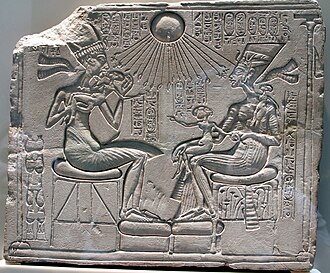
The Frescoes of Tell el-Amarna are not the name of an individual artist but of a whole epoch in Egyptian art. That epoch — the fourteenth century BC — was a time of great change, of artistic revolution. Egyptian art, famous for its strict canons and traditions, underwent a genuine upheaval, and the Amarna frescoes are the unique phenomenon that emerged from it; they astonish to this day with their beauty and their daring.
The chief works here are, of course, the frescoes themselves, discovered at Akhetaten, the capital of Egypt in the age of Akhenaten. They depict scenes of everyday life, the natural world, portraits of people with individual features. They are evidence that the artists of the day were prepared to break with traditional canons and make something new and unrepeatable. Among the most famous are the images of Akhenaten and his family — some of the most interesting and intriguing works of the period.
The key ideas of the Amarna frescoes are naturalism and individualism. These artists were the first to depict life as it actually was, rather than idealised conceptions of it, and among the first to render human beings with individual features rather than as types. This was a true revolution in Egyptian art, and it had an enormous influence on everything that followed in Egypt. The frescoes also testify that art can be more than decoration — it can be a means of expressing human emotion and human ideas.
The fate of the frescoes was not a gentle one. Many were destroyed or damaged over time, and only a portion has come down to us. The artists who made them remain unknown; we can only guess who they were and what moved them to create. Yet for all the difficulties and paradoxes, the Frescoes of Tell el-Amarna continue to inspire and to astonish with their beauty and their inventiveness.
They matter today because they belong to our common cultural inheritance. They are proof that art can be a powerful vehicle for human feeling and thought, and that it can go on inspiring us across the centuries. They remind us, too, that the artistic revolution which took place in Egypt in the fourteenth century BC shaped the whole subsequent development of art in the world. The Amarna frescoes remain a source of inspiration for artists, for art historians, and for anyone who prizes beauty and invention.